Joseph Antonio Hekking (1830-1903)


Joseph Antonio Hekking (1830–1903)
Romantic Hudson River School Landscape
Oil on Canvas • 12 x 18 in (30 x 45 cm)
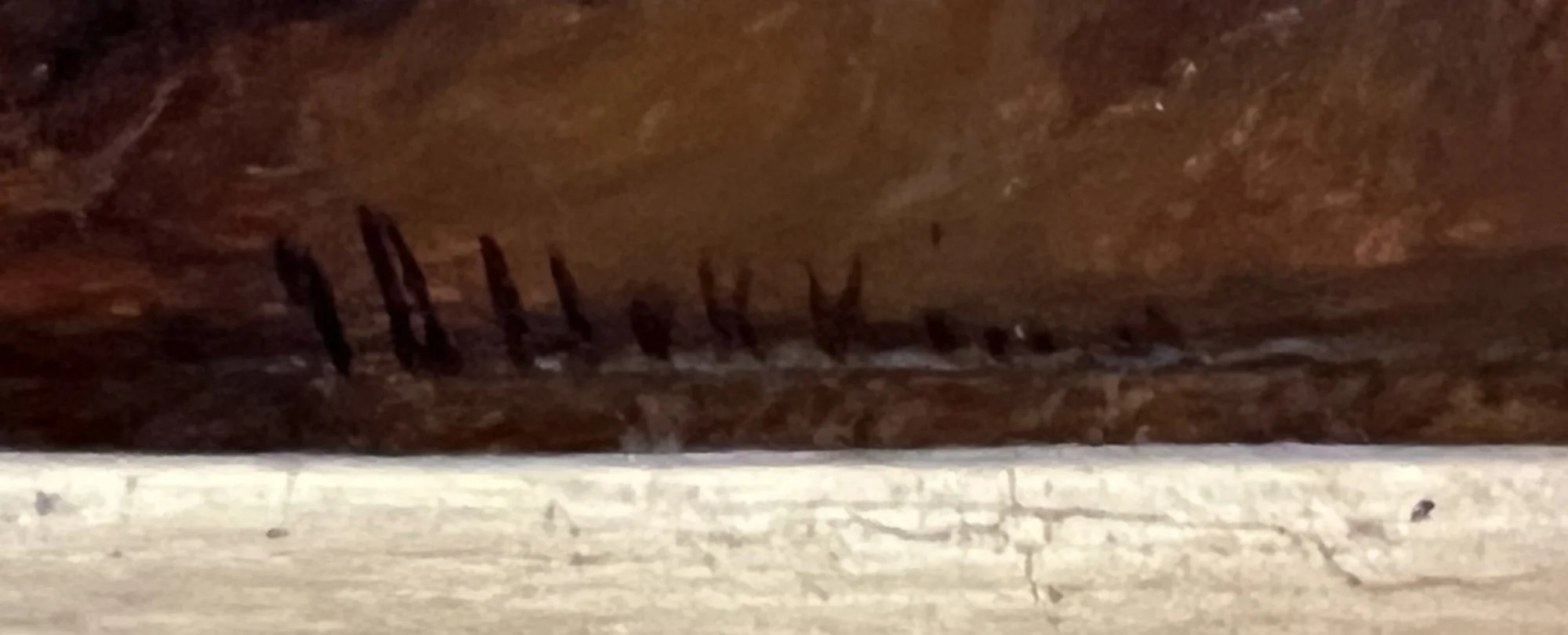
Signed lower right
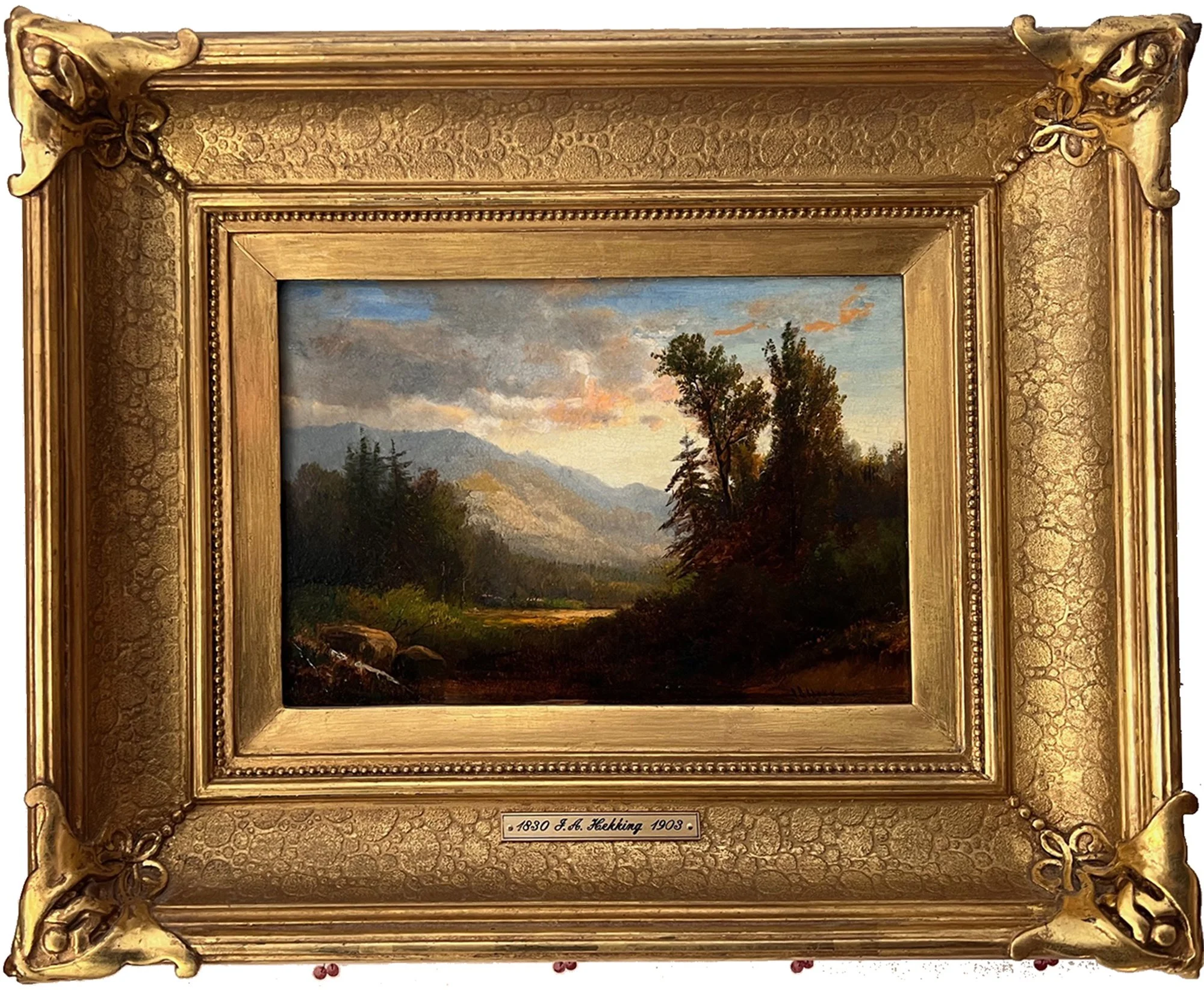
A distinguished 19th-century presentation by Joseph Antonio Hekking, this finely composed landscape exemplifies the romantic tradition of American scenic painting. Born in the Netherlands and active in the United States from the 1850s onward, Hekking exhibited landscapes of the Adirondacks and White Mountains at the National Academy of Design and was associated throughout his career with painters of the Hudson River School — the seminal American movement celebrating nature’s grandeur and atmospheric depth.
This cabinet-scale composition presents a tranquil mountain valley suffused with gentle light, characteristic of Hekking’s mature vision. The artist studied in Paris in the 1860s and brought refined draftsmanship to his American landscapes, blending European academic training with the Hudson River School’s devotion to topographical and atmospheric nuance.
Rendered with delicate control of luminous skies and verdant forestry, the painting evokes both serenity and expansiveness. The tableau — framed by elegant trees opening onto distant, mist-kissed peaks — articulates a poetic harmony between earth and sky. The warm palette and nuanced brushwork confirm Hekking’s mastery of tonal balance and compositional sophistication.
This work is presented in a richly detailed, period-appropriate gilt frame, enhancing its presence and interior appeal. An exceptional example of 19th-century American landscape painting, poised for discerning collections and fine interiors.
Joseph Antonio Hekking (1830–1903) is indeed documented as active in the United States and associated with the Hudson River School circle, exhibiting at the National Academy of Design and working in the Adirondack and White Mountain regions.
That elevates this piece beyond “decorative European landscape” and places it within the 19th-century American Romantic tradition.
Below is a reappraisal based on confirmed Hudson River School attribution.
Joseph Antonio Hekking (1830–1903)
Joseph Antonio Hekking was a 19th-century landscape painter associated with the circle of the Hudson River School, the first major movement in American art devoted to the grandeur and spiritual resonance of the natural world.
Born in the Netherlands in 1830, Hekking trained in the European academic tradition before establishing himself in the United States during the mid-19th century. His work reflects a synthesis of European draftsmanship and the distinctly American Romantic vision that defined the Hudson River School. He is recorded as having exhibited at the National Academy of Design and was active during the height of America’s landscape movement.
Hekking’s paintings frequently depict mountain valleys, wooded expanses, and luminous horizons rendered with atmospheric sensitivity. Like many artists working within the Hudson River School circle, he embraced a compositional structure that draws the viewer from a shaded foreground into expansive distance — a visual metaphor for both discovery and contemplation. His work often evokes the scenic regions celebrated by collectors of the era, including the White Mountains and the Adirondacks.
While not counted among the movement’s most monumental figures such as Frederic Edwin Church or Albert Bierstadt, Hekking belongs to the respected second generation of painters who sustained and commercialised the Romantic American landscape tradition for a growing national audience. Cabinet-scale works such as this were created for private collectors seeking both aesthetic refinement and cultural identity within their interiors.
Today, Hekking’s paintings represent a tangible link to 19th-century American Romanticism — a period when landscape painting was not merely decorative, but philosophical. His works remain valued for their atmospheric serenity, classical composition, and enduring interior appeal.
Inquire about this painting