Rare Lemuel Curtis Lyre-Form Girandole Wall Timepiece
Circa 1815-1818
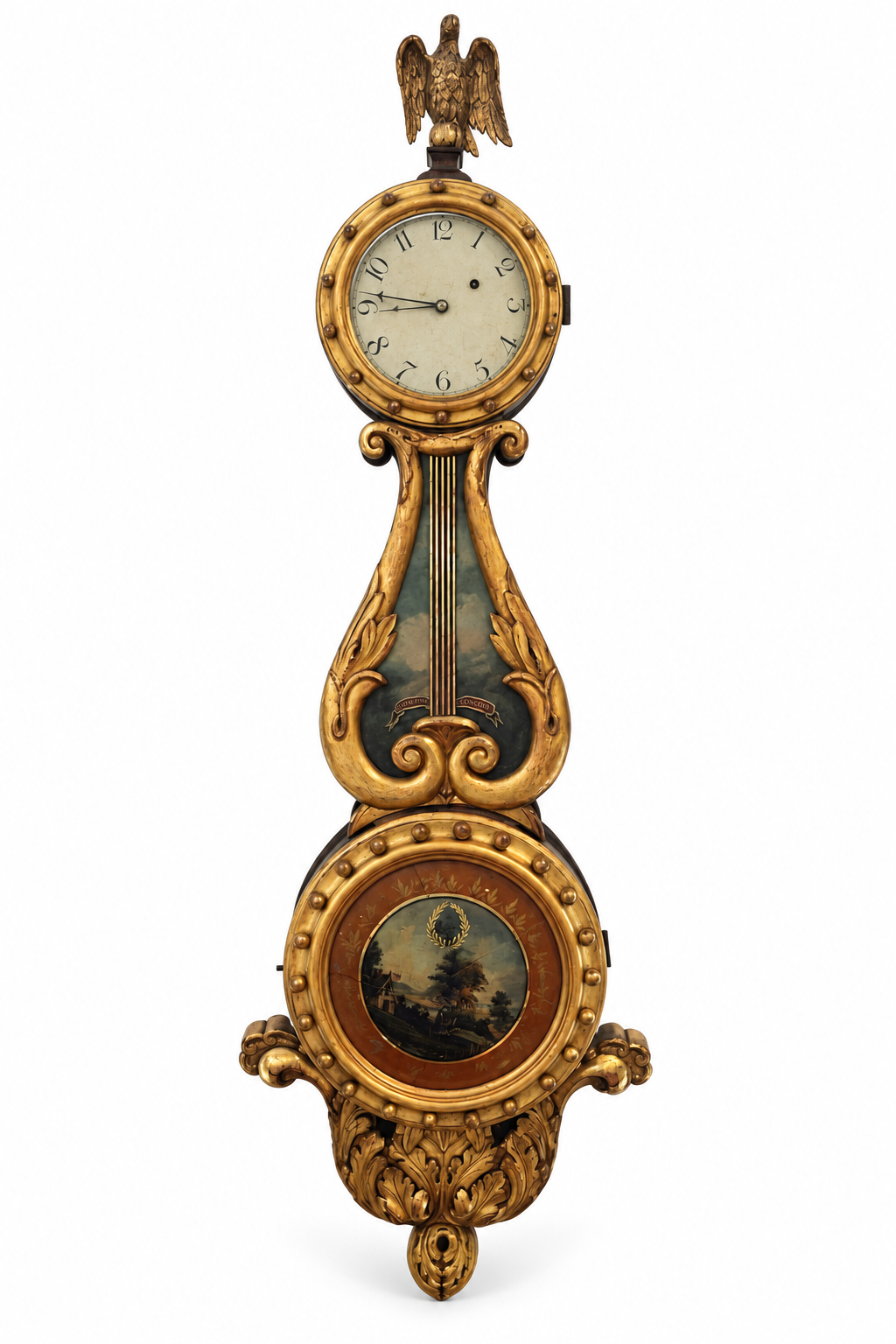
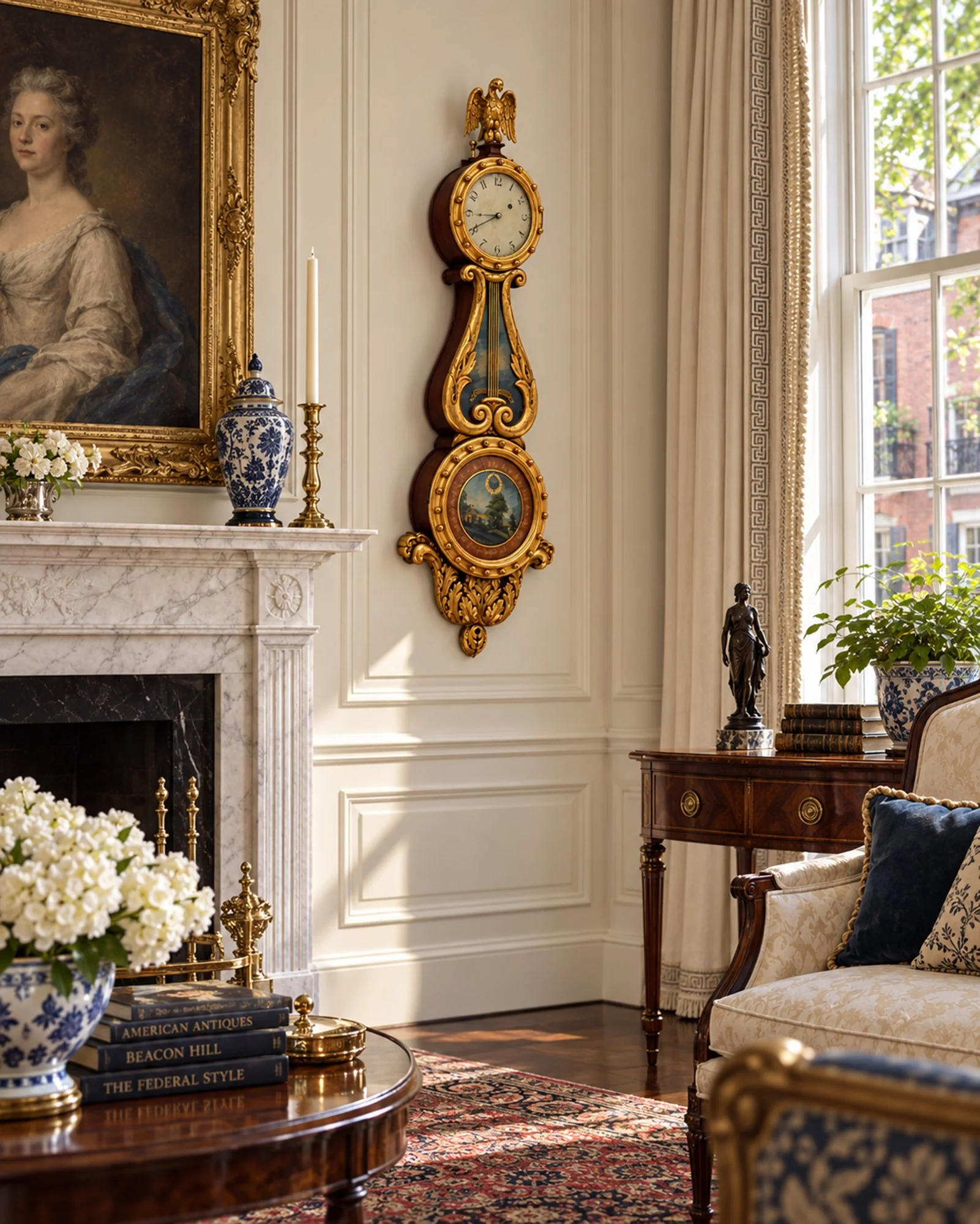
A Rare Lemuel Curtis Parcel-Gilt Mahogany Lyre-Form Girandole Wall Timepiece
Lemuel Curtis (1790-1857)
Lemuel Curtis (1790–1857)
Concord, Massachusetts
Circa 1815–1818
Height: approximately 44–45 in.
Width: approximately 14½ in.
Depth: approximately 4½ in.
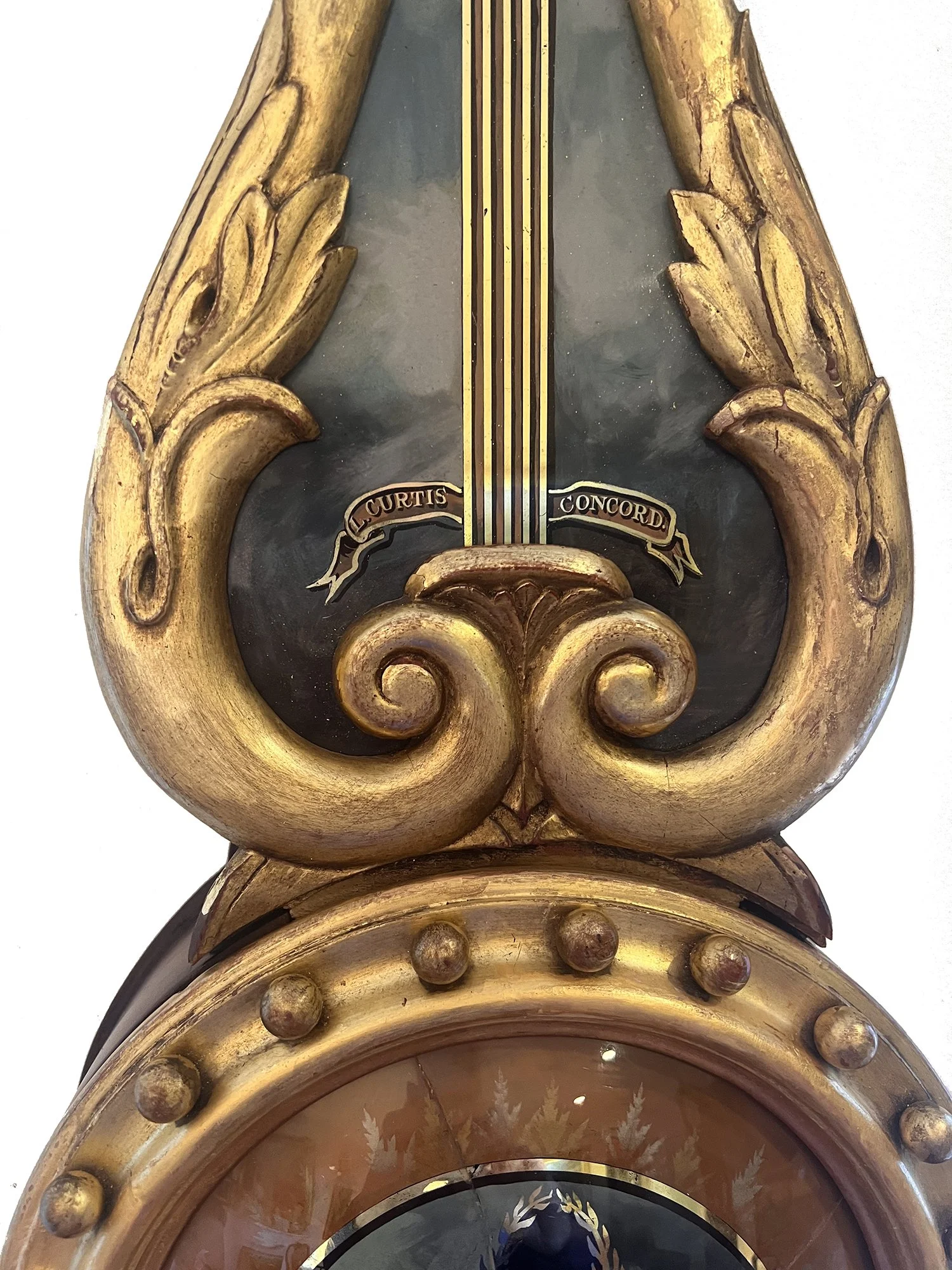
Signed: L. CURTIS / CONCORD on the reverse-painted lyre tablet.
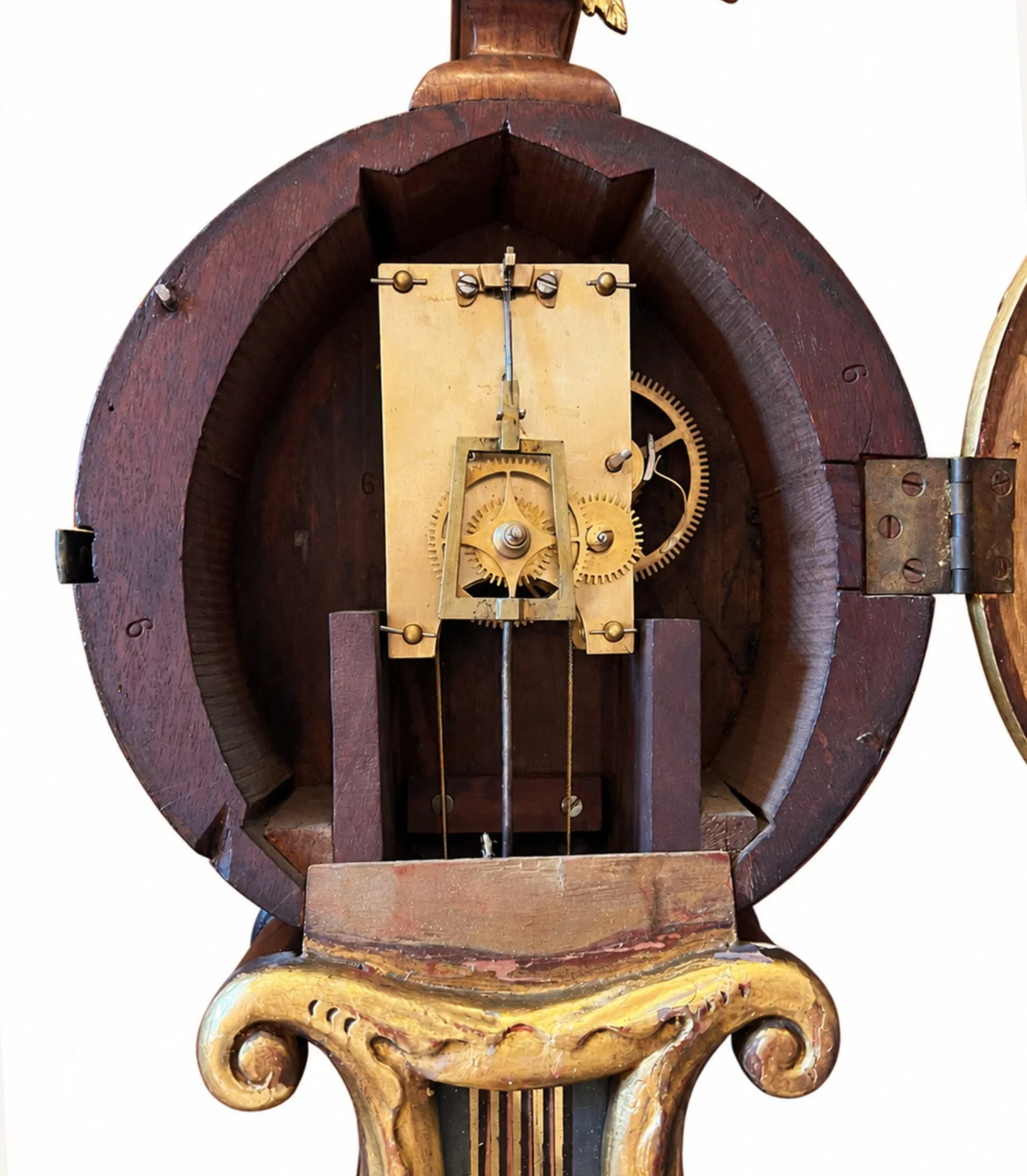
Assembly marks: Case elements and pendulum numbered 6.
Historic service labels: J. D. Conlon, Boston, inscribed Overhauled: Aug. 1950; Joseph R. Bates, “The British Clockmaker,” Newfane, Vermont, dated December 1967.
A rare and exceptionally decorative early American girandole wall timepiece by Lemuel Curtis of Concord, Massachusetts, retaining its remarkable parcel-gilt lyre-form case, signed reverse-painted glass, early weight-driven movement and matched numbered components.
Approximately 44–45 inches high.
The clock is crowned by an American eagle above a circular painted iron dial and richly ornamented gilt surround. Beneath, an extraordinary lyre-form throat incorporates reverse-painted glass with gilt and red strings rising against a cloudy blue-gray ground. Two painted banners prominently identify the maker:
L. CURTIS — CONCORD
A circular lower section framed by gilt spheres contains a convex reverse-painted landscape, while deeply carved and gilded acanthus ornament forms the elaborate pendant beneath.
This is not simply a conventional banjo clock. It represents the highly decorative girandole tradition developed by Lemuel Curtis during his Concord period, in which the architecture of the familiar American wall timepiece was transformed through carved gilding, painted glass and sculptural ornament.
Curtis's girandole was among the most ambitious American clock designs of the early nineteenth century. Contemporary and modern scholarship connects Curtis closely with the Willard clockmaking tradition, and his 1817 advertising specifically promoted his elaborate girandole form. Christie’s has noted that fewer than one hundred may originally have been made and that only a small number survive today.
Remarkable survival
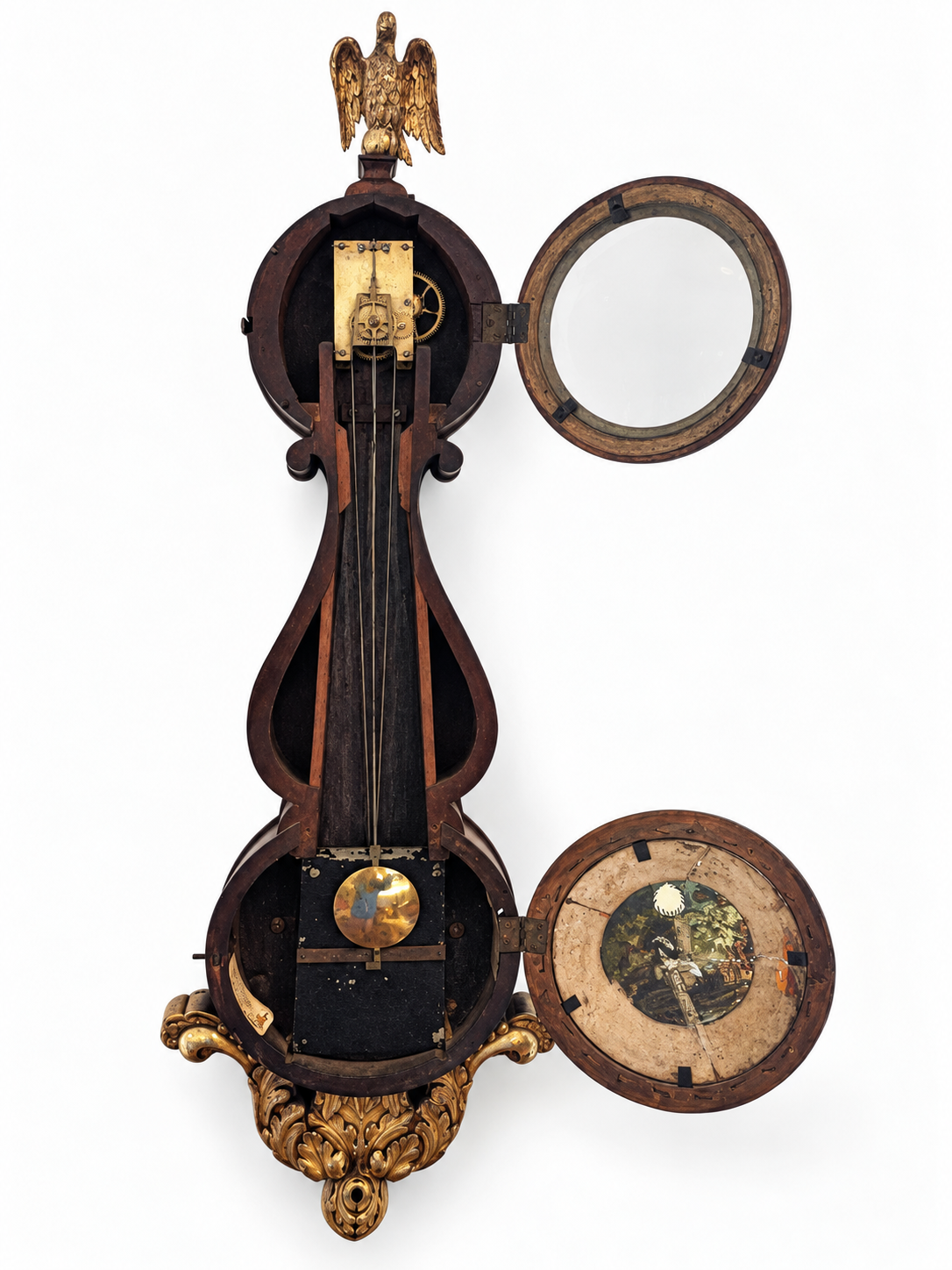
The interior of this clock is particularly revealing.
The mahogany case retains extensive evidence of early construction, while the reverse of the signed lyre tablet shows considerable age and surviving painted decoration. The brass weight-driven movement, pendulum system and case members remain installed within the original structural arrangement.
Perhaps most significant are the repeated workshop assembly marks.
Numerous elements are impressed: “6”