Curtis & Dunning Bow-Front Banjo Timepiece
Circa 1820-1830
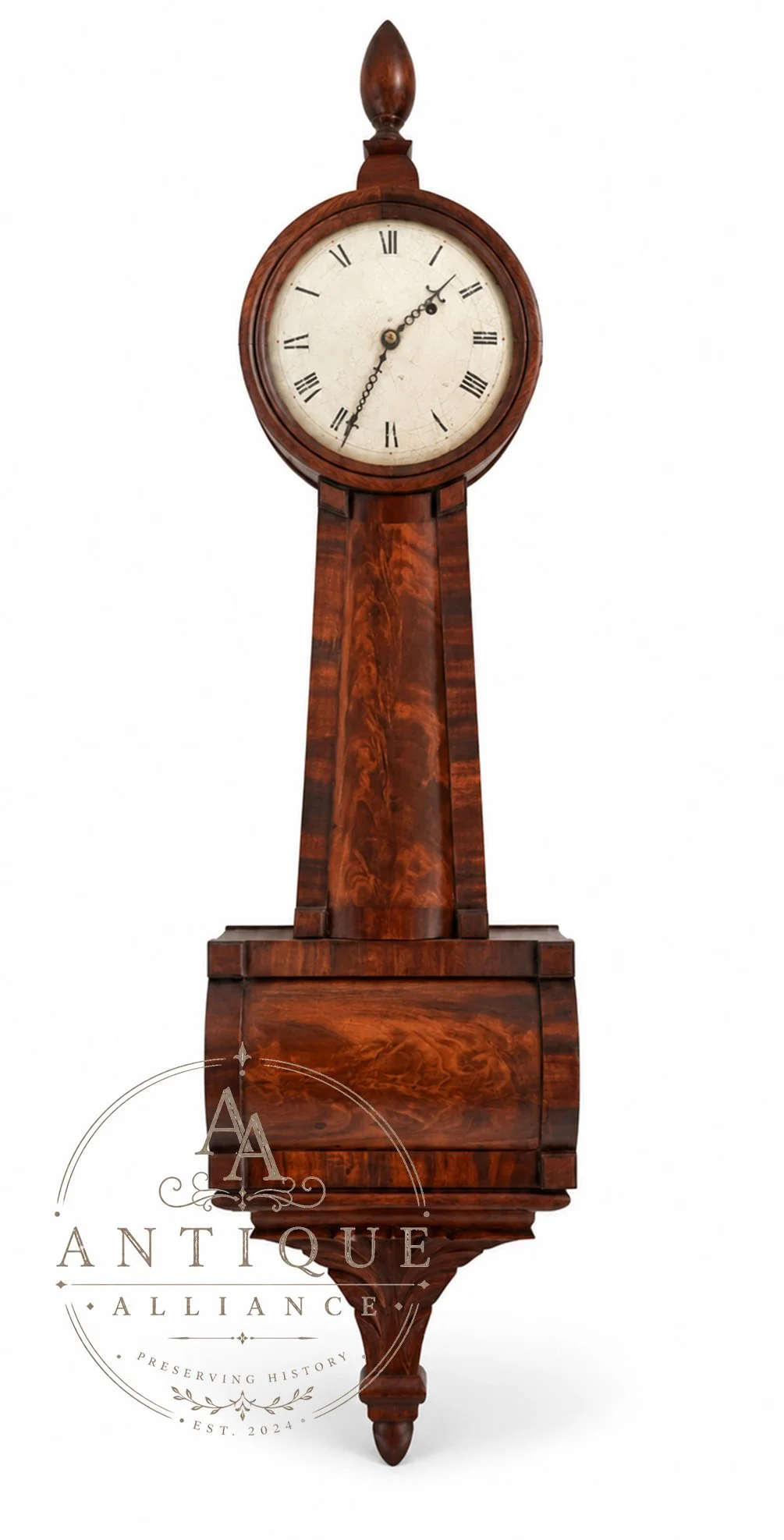
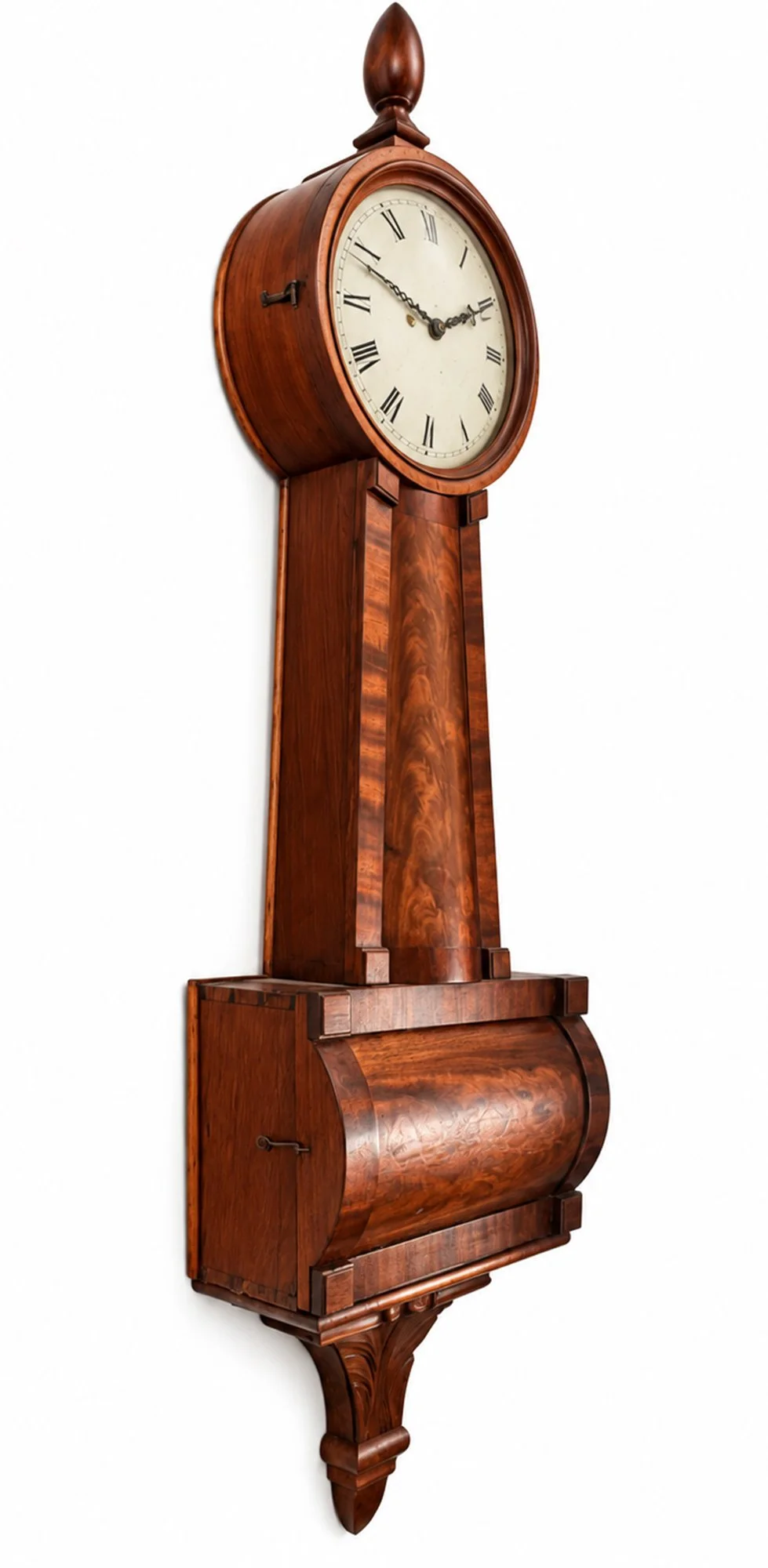
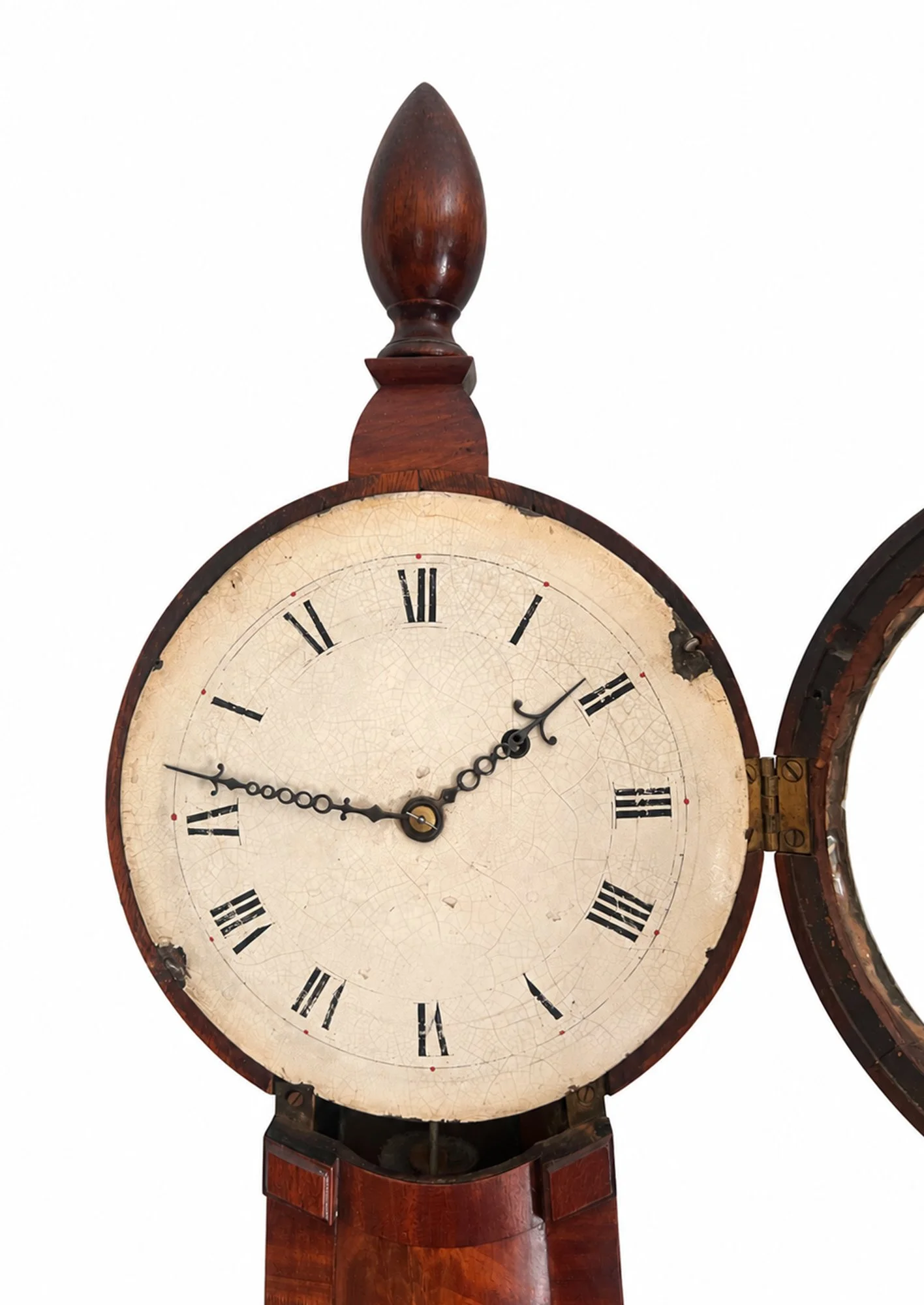
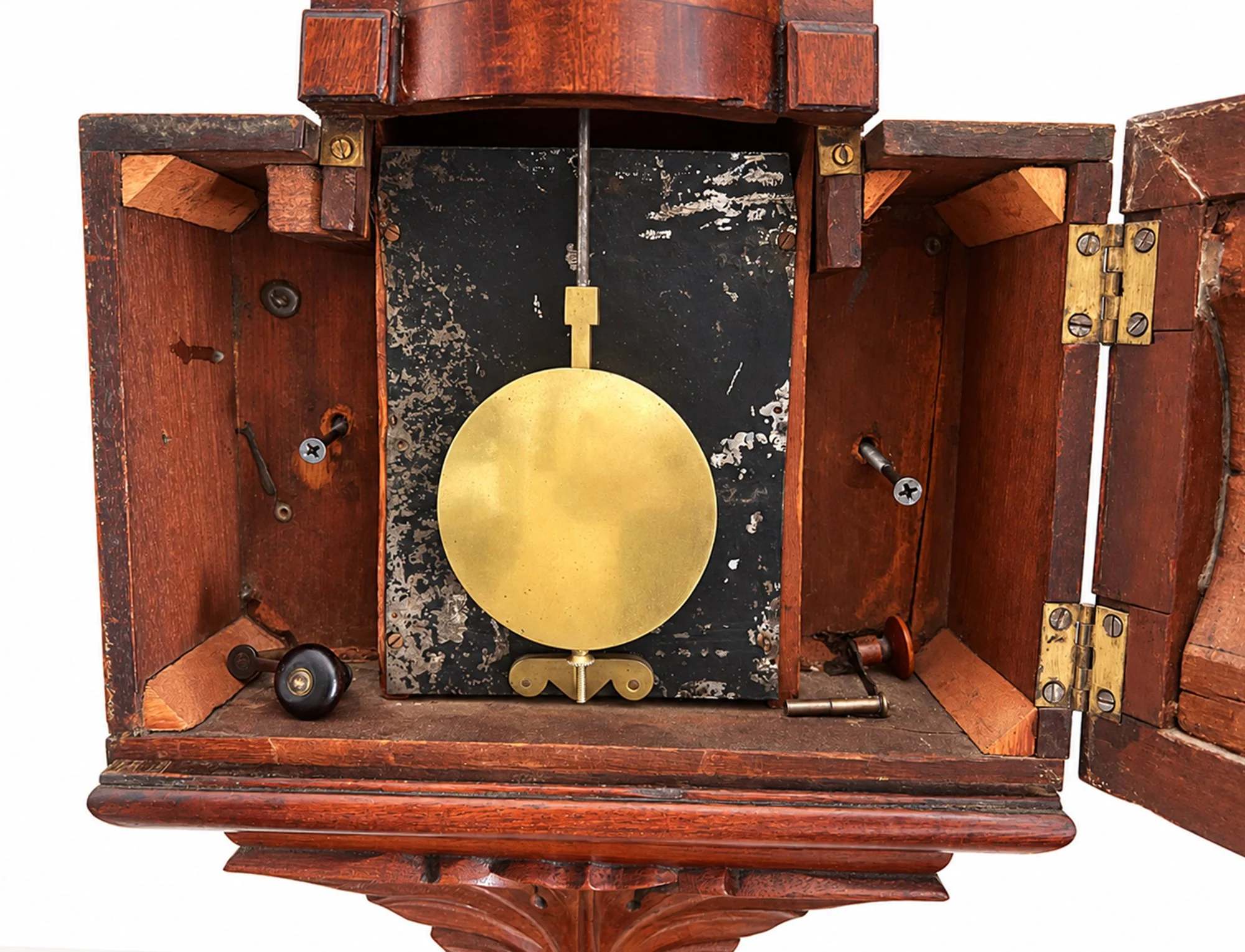
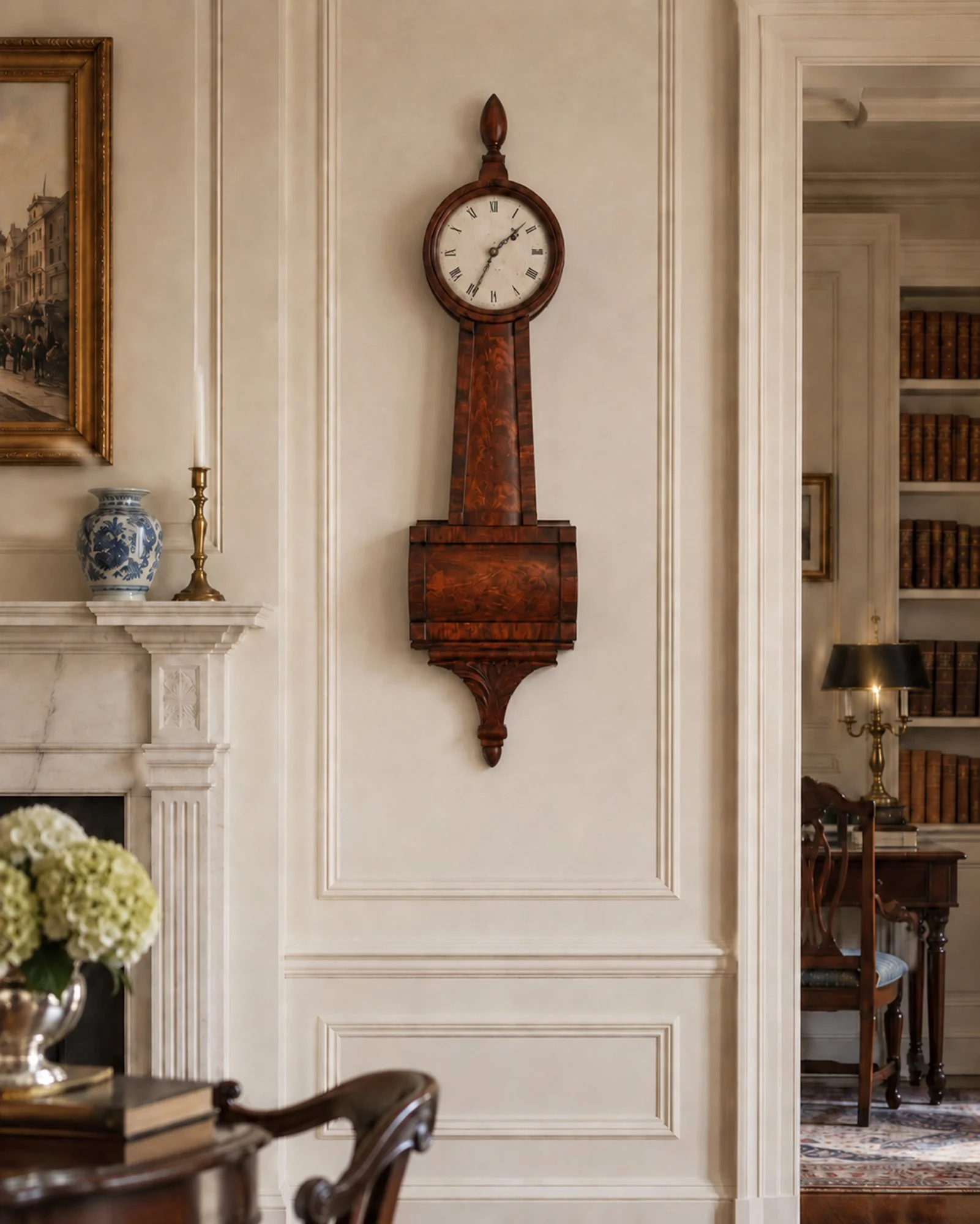
Curtis & Dunning Bow-Front Patent Timepiece
Burlington, Vermont, circa 1820–1830
Mahogany and figured mahogany veneer
Dial faintly signed: “Warranted by Curtis & Dunning”
Approximately 43 inches high
Curtis was one of the important craftsmen working within the Willard clockmaking tradition. He was related to Aaron Willard by marriage and is generally thought to have trained within the Willard circle. Curtis and Dunning worked together in the early nineteenth century, first in Massachusetts and later in Burlington, Vermont. Specialist clock dealer Delaney dates their formal partnership to about 1820–1832, with the move from Concord to Burlington around 1821.
Institutional collections establish their significance. The Metropolitan Museum of Art owns a Curtis & Dunning banjo clock, while The Henry Ford owns another period example bearing the inscription “WARRANTED BY CURTIS & DUNNING.”
The case is the particularly interesting part
Clock is substantially different from the Curtis & Dunning clocks most collectors encounter.
The conventional form generally has a circular dial above a narrow throat and rectangular lower box, but the fronts are often ornamented with gilt rope moldings and reverse-painted glass tablets. Your clock instead relies almost entirely on cabinetmaking: rich mahogany veneers, a fully veneered tapered throat, a projecting bowed lower door, and carved wooden finials.
That makes it visually much closer to what collectors call a wood-front or bow-front patent timepiece.
A documented auction record specifically identifies a “Curtis & Dunning Bow Front Banjo Clock,” circa 1820–1830, in a mahogany bow-front case. That comparison is significant because it establishes that this unusual case treatment is a recognized Curtis & Dunning form rather than an anomalous later alteration.
Your example appears considerably more elaborate than the recorded auction example.
The broad lower box has a pronounced convex front veneered with highly figured mahogany. Above it, the throat uses a dramatic vertical panel of flame or crotch mahogany bounded by darker crossbanding. The circular head retains the same sophisticated treatment, and the carved lower pendant develops into a strong foliate or anthemion-like Federal motif.
The result is surprisingly architectural.
Cabinet quality
The veneer selection is excellent.
The central throat has the kind of strongly figured, almost flame-like mahogany that cabinetmakers reserved for visually important surfaces. The lower bowed panel is similarly selected, with the grain intentionally centered to create a symmetrical decorative effect.
The darker horizontal and vertical banding gives the clock definition without the gilding normally used on presentation banjos.
At roughly 43 inches, it is also a substantial example. Many Curtis & Dunning banjos survive in the 32–34 inch range, although larger clocks are known. A specialist Curtis & Dunning example described by Delaney measured about 41 inches, while institutional examples can be larger still.
Your proportions look particularly successful—the long throat gives the clock considerably more elegance than the shorter commercial variants.
Inquire about this Clock