Cobalt-Blue Porcelain Annular Vase Clock
Third Quarter 19th Century
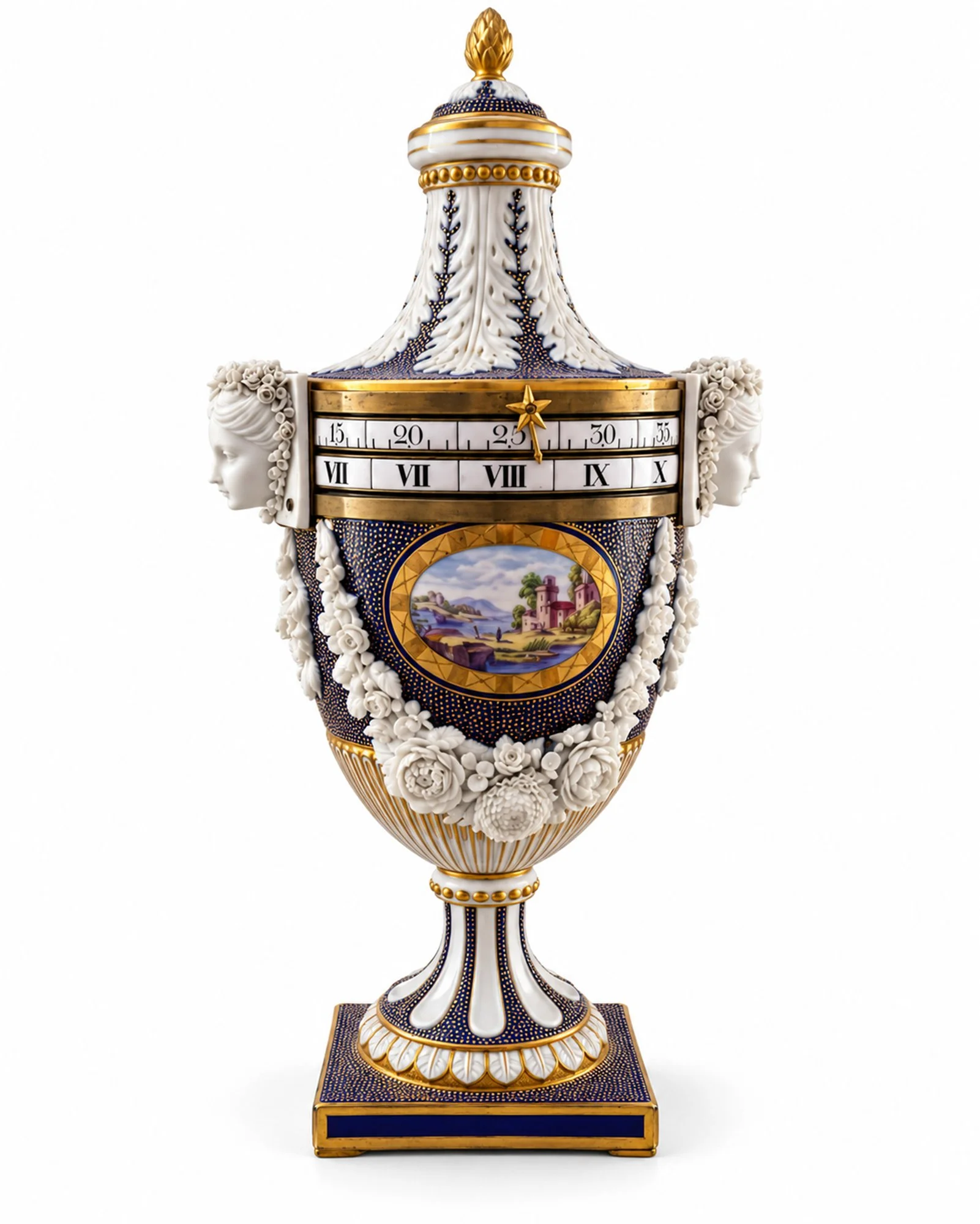
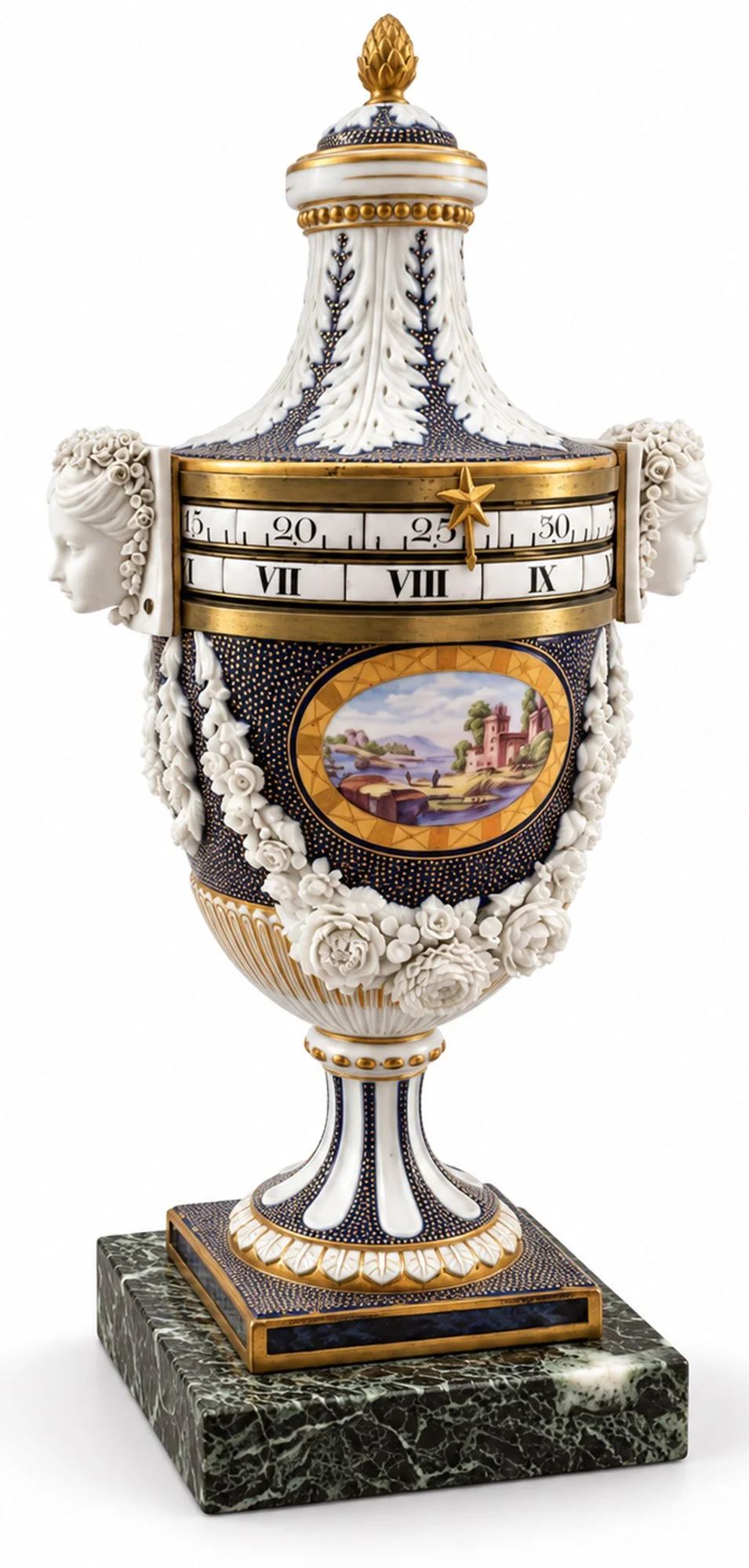
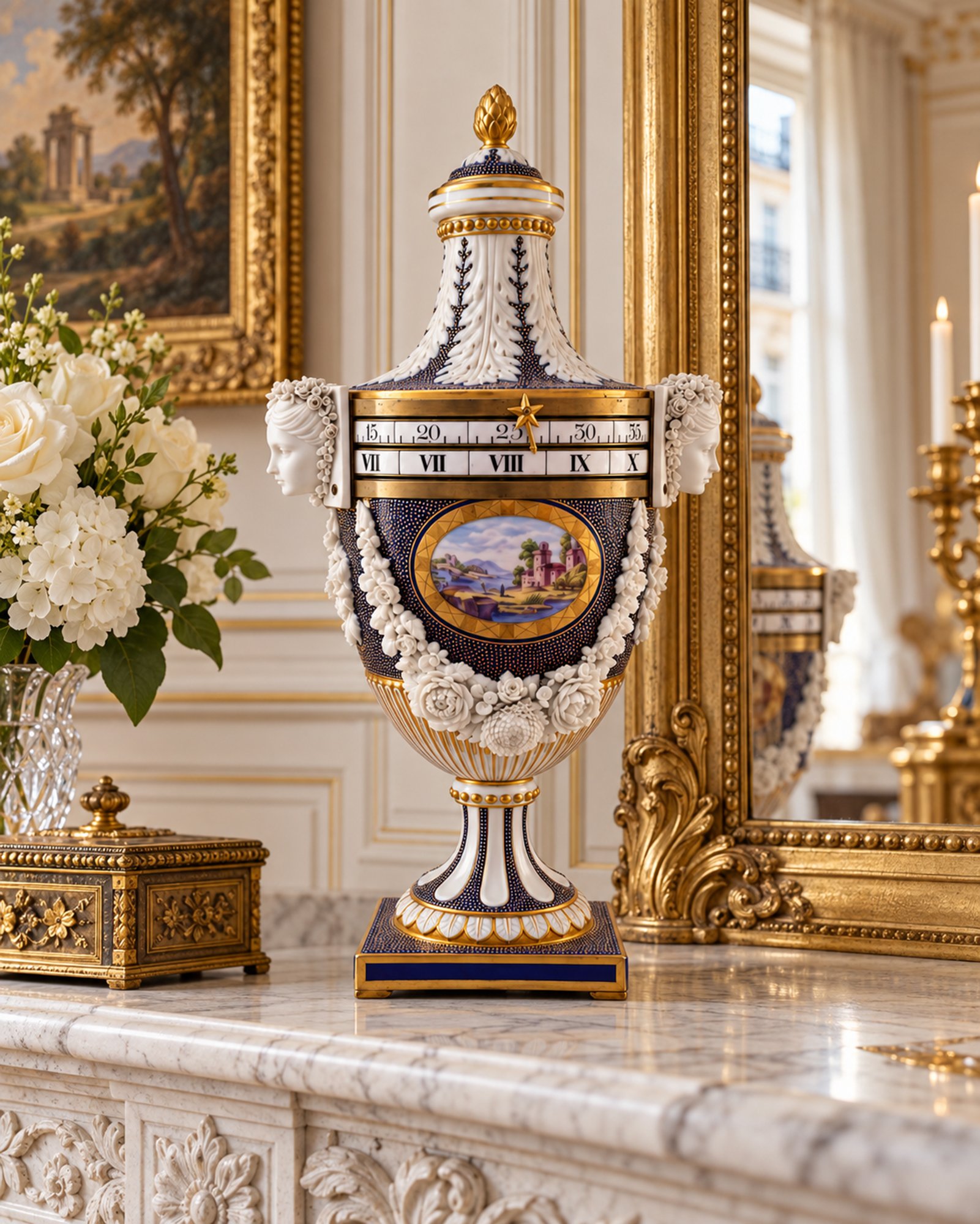
A Fine French Samson Porcelain Annular Vase Clock with Vincenti & Cie Movement After the Celebrated Eighteenth-Century Niderviller Model
France | Attributed to Edmé Samson, Paris | 3rd quarter of the 19th Century
Height: 14¾ inches (37.5 cm), excluding later marble base
An exceptionally fine and richly decorated French porcelain annular vase clock, attributed to the celebrated Parisian porcelain manufactory of Edmé Samson, dating to the second half of the nineteenth century and modeled after the distinguished eighteenth-century examples produced by the Niderviller porcelain factory in Lorraine.
This elegant timepiece combines elaborate neoclassical porcelain decoration, finely modeled biscuit-porcelain sculpture, beautifully painted landscape reserves, and an ingenious mechanical movement operating two revolving annular chapter rings.
The clock takes the form of a classical covered urn, its deep cobalt-blue porcelain ground enriched throughout with an intricate pattern of applied gilded dots, known as gilt-seeded decoration.
The gracefully tapering neck is embellished with deeply modeled white acanthus leaves cascading over the blue ground and rising toward a domed cover surmounted by a gilded pinecone finial. Delicate gilded beadwork and ornamental borders further articulate the architectural form.
Flanking the upper body are two finely modeled biscuit-porcelain female masks, their classical profiles framed by elaborately arranged hair adorned with individual flowers and roses. These sculptural elements are characteristic of the celebrated Niderviller design and illustrate the extraordinary attention devoted to the ornamental modeling of the porcelain.
Below the annular dial, the richly decorated body features an oval polychrome landscape reserve depicting classical architecture situated within a romantic riverside setting, with distant mountains, trees, and figures. The painting is enclosed within a geometric gilt border, providing an elegant contrast to the surrounding cobalt-blue and gilt-seeded ground.
A corresponding painted landscape reserve decorates the reverse.
Elaborate garlands of individually modeled white porcelain flowers descend from the female-mask handles, sweeping across the body and terminating in an abundant arrangement of finely detailed roses and blossoms.
The lower body is enriched with radiating gilded fluting and supported upon a slender pedestal embellished with applied white foliate ornament against the cobalt-blue ground. The vase rests upon a square porcelain plinth with gilt borders.
The clock is accompanied by a later rectangular green marble base.
The Annular Timekeeping Mechanism
One of the most fascinating features of this clock is its unusual method of displaying time.
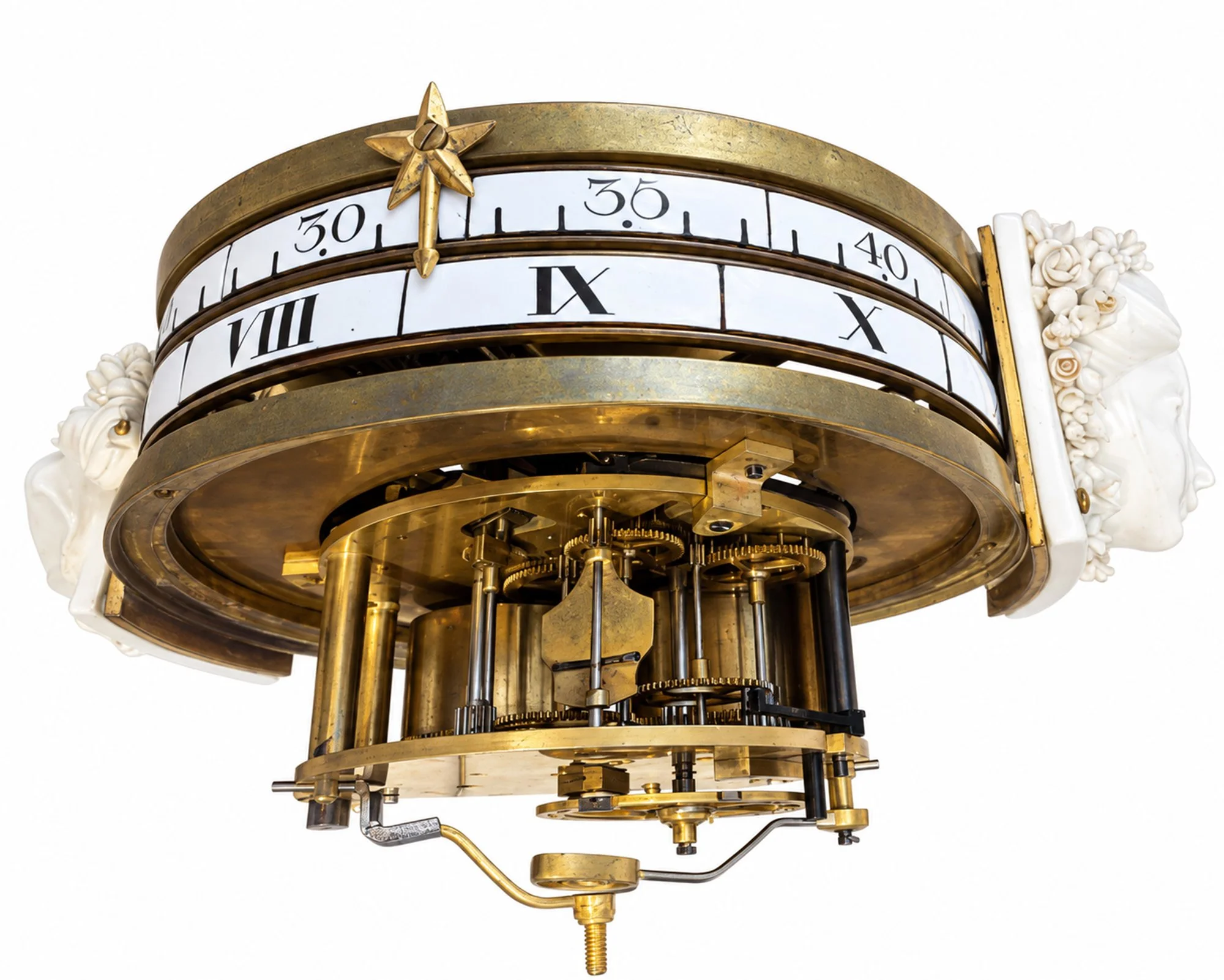
Rather than utilizing conventional hands, the clock employs two horizontally revolving enamel chapter rings encircling the upper portion of the vase.
The lower ring displays Roman numerals representing the hours, while the upper ring is graduated with Arabic numerals indicating the minutes.
A stationary gilt star-shaped pointer marks the passage of time as the two chapter rings rotate beneath it.
This ingenious mechanism allows the clock to retain the appearance of an elegant porcelain vase while incorporating a sophisticated and visually engaging timekeeping system.
Movement — Vincenti & Cie, France
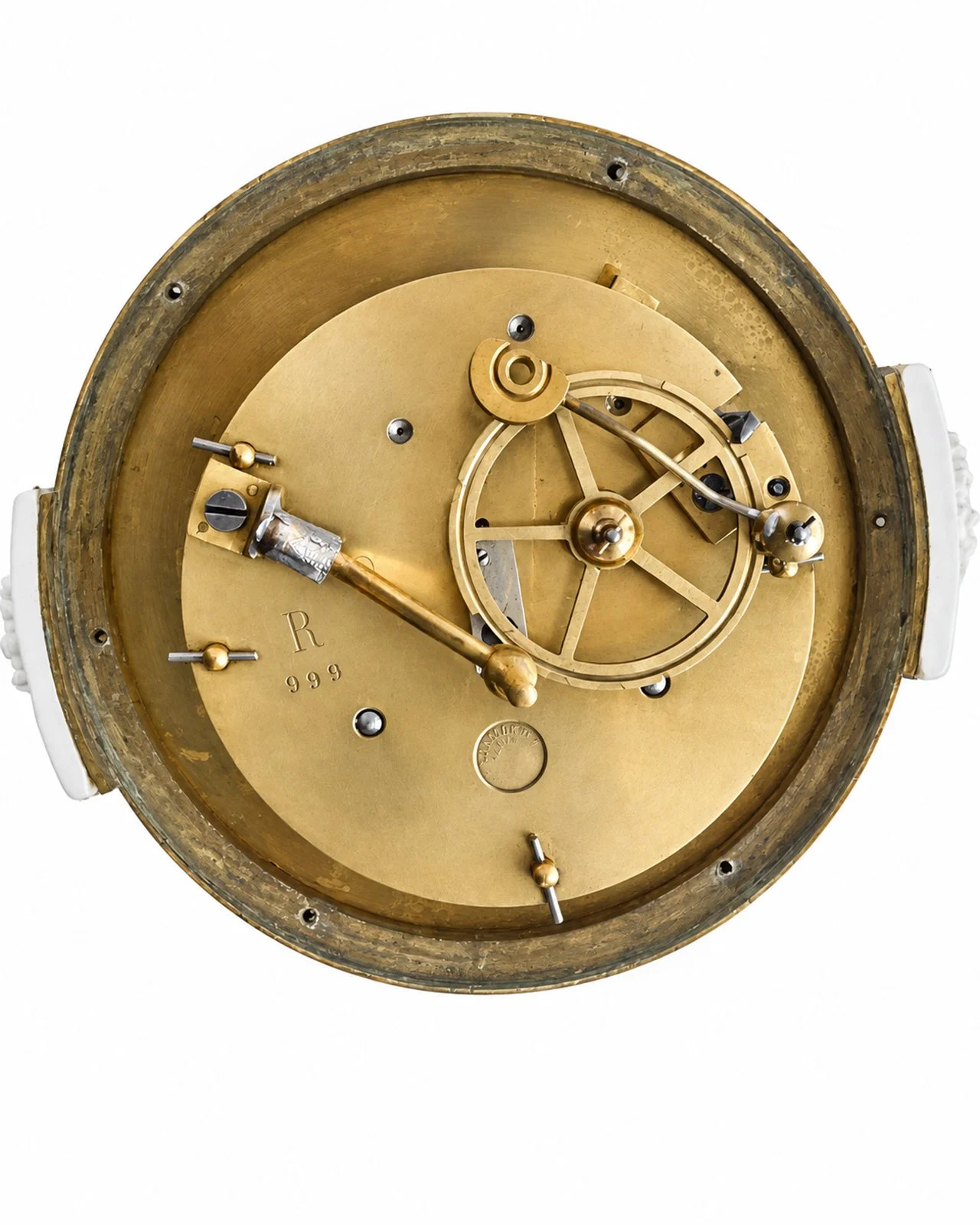
The clock contains a substantial French brass movement bearing a circular maker's stamp consistent with the silver-medal trademark of Vincenti & Cie, together with the stamped letter R and movement number 999.
Vincenti & Cie was among the important French clock-movement manufacturers of the nineteenth century. The firm's silver-medal trademark commemorates its recognition at the Paris Universal Exhibition of 1855.
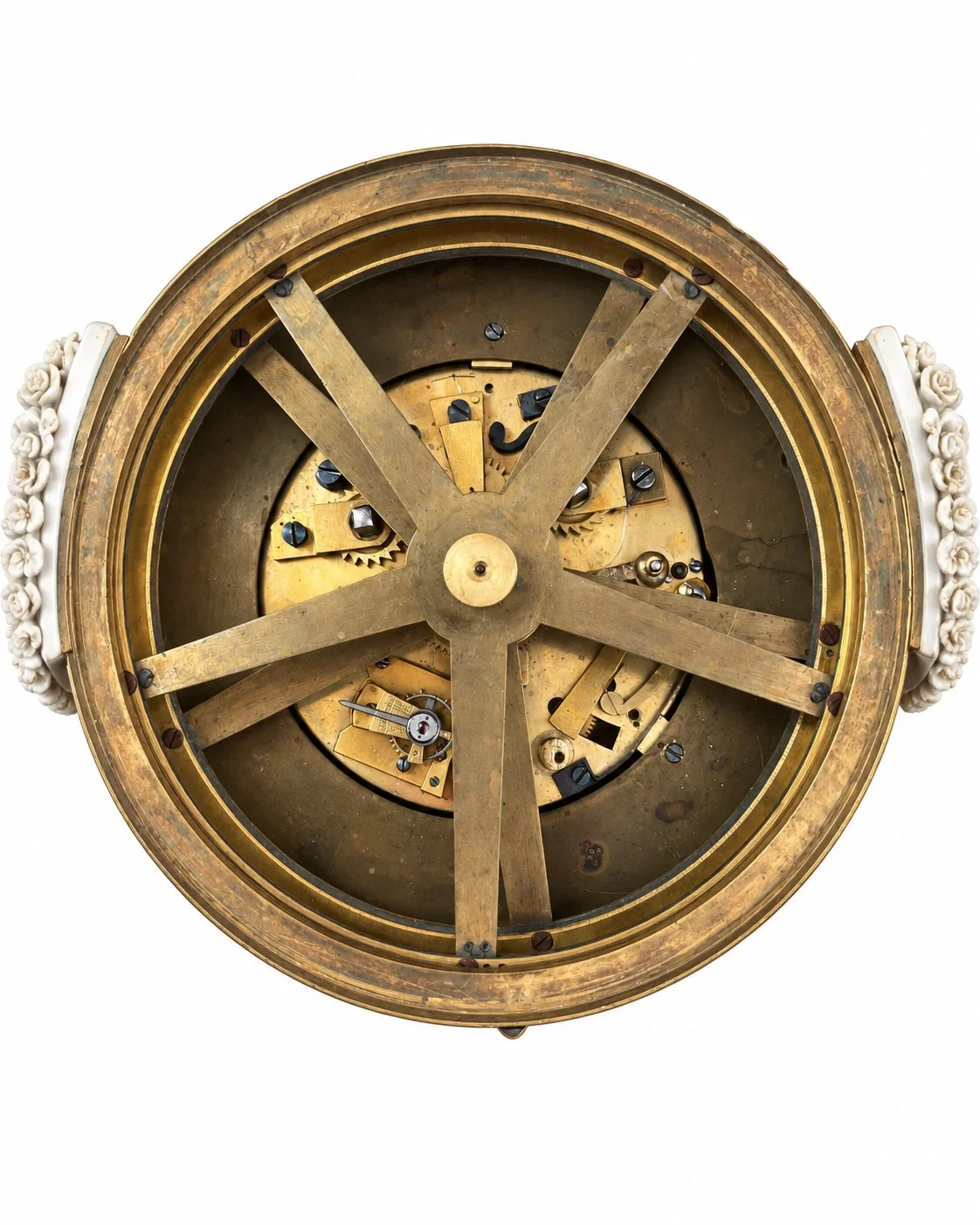
The movement's construction and markings are consistent with manufacture during the second half of the nineteenth century.
The exposed mechanism, revolving chapter-ring assemblies, and elaborate supporting framework illustrate the considerable mechanical ingenuity required to operate this unusual form of clock.
Porcelain Marks and Attribution
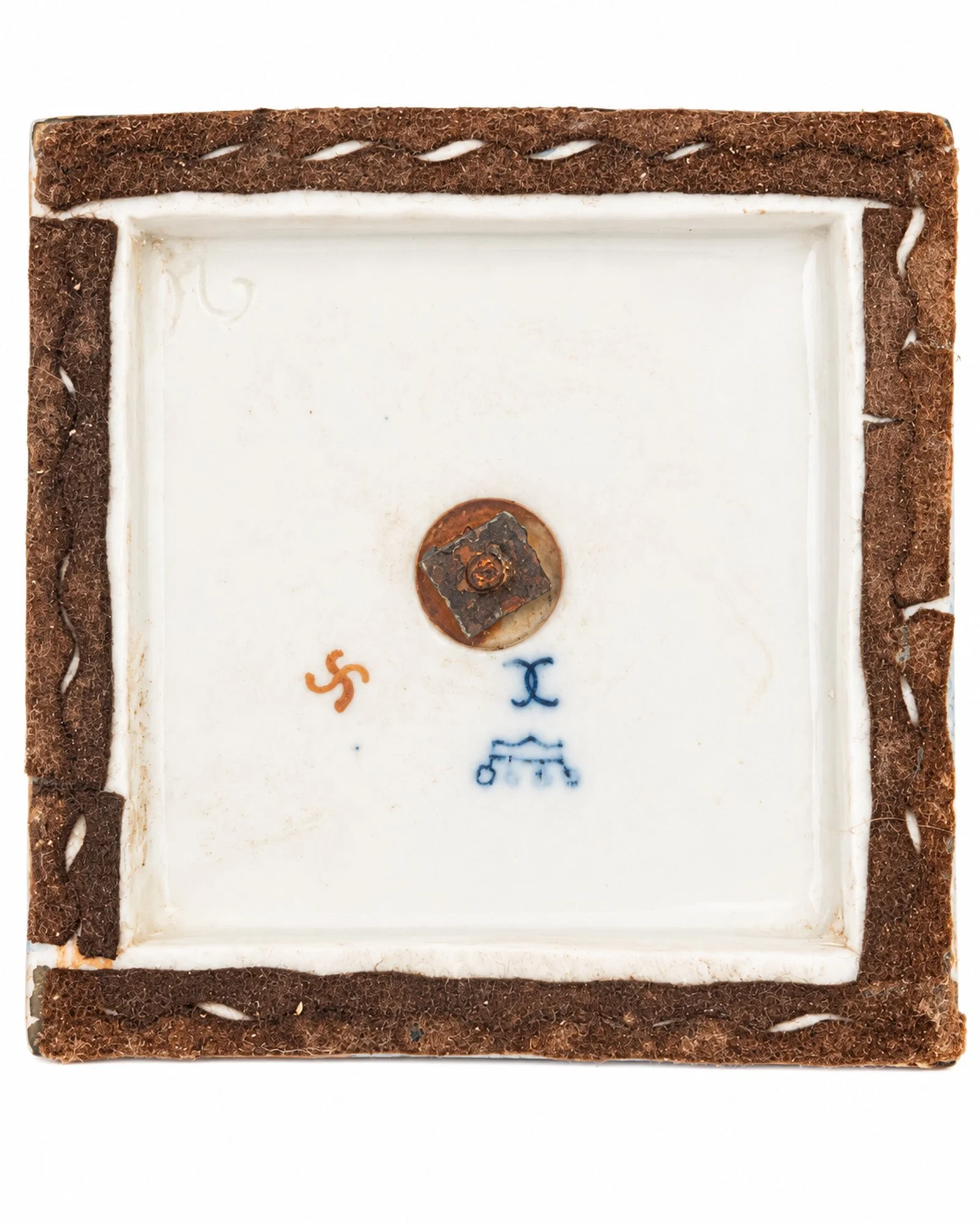
The underside of the porcelain base bears several painted marks of particular interest, including a blue interlaced monogram, an additional blue symbol, and a separately applied reddish-orange intertwined mark.
The blue monogram closely resembles the crowned interlaced C's associated with the eighteenth-century Niderviller porcelain manufactory.
The reddish-orange marking is suggestive of the intertwined S monogram associated with the Parisian porcelain manufacturer Edmé Samson.
Samson's manufactory, established in the nineteenth century, became particularly celebrated for producing accomplished reproductions of important eighteenth-century European porcelain, including elaborate examples inspired by the royal and aristocratic manufactories of France.
Notably, Christie's has documented a closely related nineteenth-century Samson annular vase clock bearing a spurious crowned interlaced C's mark, confirming the use of Niderviller-style markings on these later productions.
The correspondence between the present clock's porcelain marks, decorative design, and Vincenti & Cie movement strongly supports an attribution to Samson during the second half of the nineteenth century.
Although the precise attribution remains subject to further specialist examination, the clock represents a highly accomplished example of nineteenth-century French decorative porcelain and mechanical craftsmanship.
Historical Significance
The original Niderviller annular vase clocks rank among the more inventive decorative timepieces of the late eighteenth century.
Produced during a period of extraordinary artistic achievement in French porcelain and horology, these elaborate clocks combined neoclassical sculptural forms with ingeniously concealed mechanical movements.
The distinctive design, incorporating rotating enamel chapter rings, finely modeled female-mask handles, applied floral garlands, and richly ornamented porcelain surfaces, became particularly admired among collectors of French decorative arts.
Important examples are documented in historic collections, including the Musée Nissim de Camondo in Paris, as well as in major international auction sales.
During the nineteenth century, the Samson manufactory revisited many of these celebrated eighteenth-century models, producing highly accomplished interpretations intended for discerning collectors and the growing international market for French decorative arts.
The present example illustrates the enduring appeal of the original Niderviller design and the considerable technical and artistic skill required to reproduce such an elaborate porcelain and mechanical composition.
Related Auction Examples and Literature
Christie's — Lot 5328167
A nineteenth-century Samson porcelain annular vase clock closely corresponding in form and decoration, with gilt-seeded blue ground, biscuit-porcelain female-mask handles, applied floral garlands, landscape reserves, and rotating enamel chapter rings.
Christie's — Lot 4165643
A nineteenth-century French porcelain annular vase clock after the Niderviller model, illustrating the continued production of this distinctive design.
Christie's — Lot 1075867
An eighteenth-century Niderviller annular vase clock, illustrating the historical origins of the model and its importance within French decorative horology.
Sotheby's, Paris — November 27, 2024, Lot 175
A Niderviller Porcelain and Gilt-Bronze Vase Clock, circa 1785.
The Giordano Collection: Une Vision Muséale, Part II.
Presale estimate: €8,000–€12,000.
A particularly close example, standing approximately 14¼ inches high.
Literature: Pierre Kjellberg, Encyclopédie de la Pendule Française du Moyen Âge au XXe Siècle, p. 301, plate D, illustrating a related model.
These references document comparable examples of the design and do not establish provenance for the present clock.
Antique Alliance Commentary
This extraordinary clock represents a particularly successful marriage of French porcelain artistry and mechanical ingenuity.
Its richly ornamented cobalt-blue surface, delicate biscuit-porcelain female masks, sculptural floral garlands, and revolving enamel chapter rings create an object that is simultaneously an elegant neoclassical sculpture and a sophisticated mechanical timepiece.
The probable attribution to Edmé Samson, combined with the Vincenti & Cie movement and the clock's close correspondence to documented eighteenth-century Niderviller examples, gives this piece considerable historical and decorative interest.
A distinctive and highly collectible example of nineteenth-century French decorative horology.
Origin: France, probably Paris
Porcelain: Attributed to Edmé Samson, after the Niderviller model
Period: Third Quarter of the nineteenth century
Movement: Vincenti & Cie, stamped R and 999
Materials: Gilt-decorated cobalt-blue porcelain, biscuit-porcelain ornament, painted landscape reserves, enamel chapter rings, brass movement, and later green marble base
Height: 14¾ inches (37.5 cm), excluding later marble base
Inquire about this Clock