A Large French Polychrome Figural Swing Mystery Clock
Circa 1890-1905
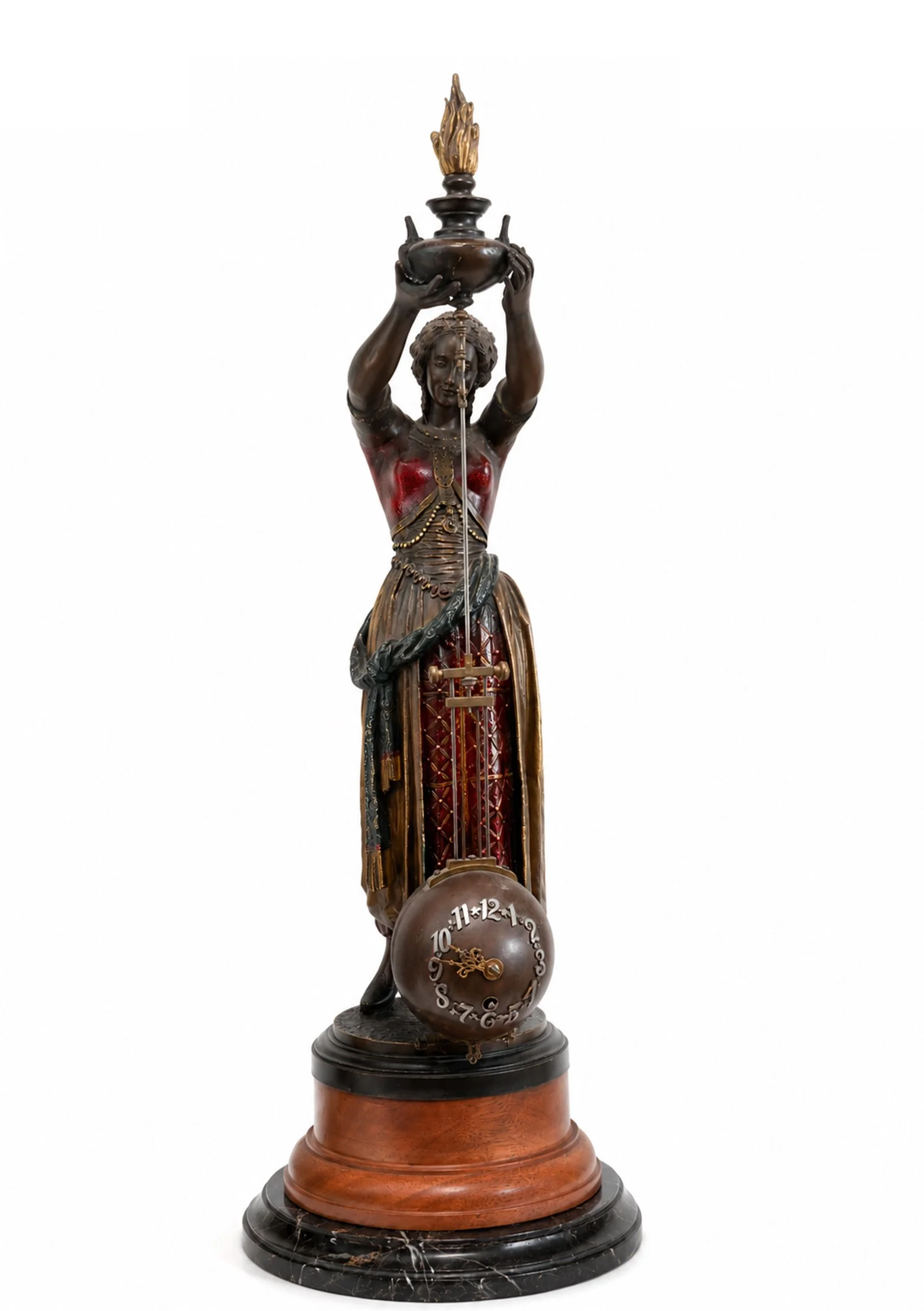
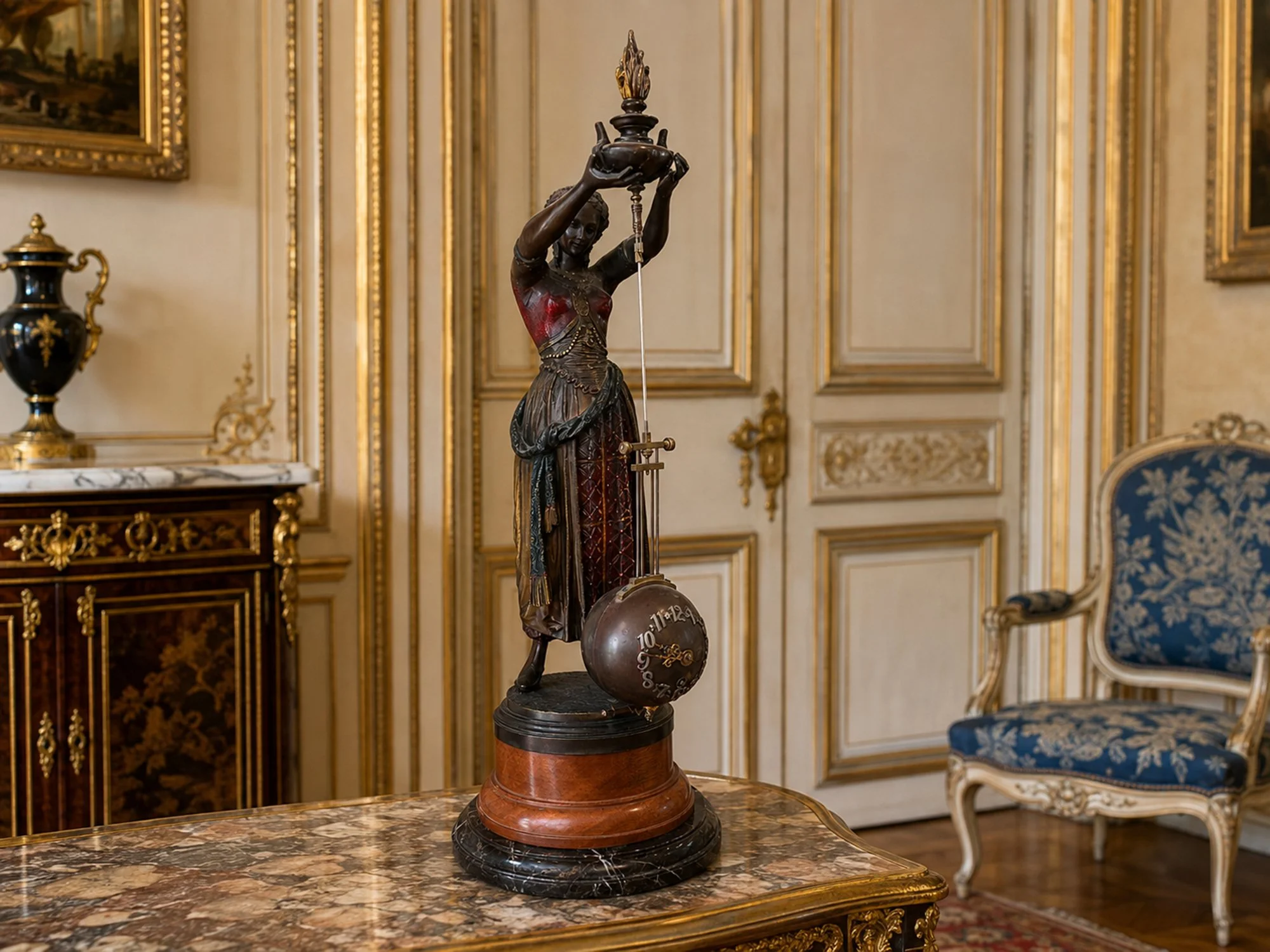
A Large French Polychrome Figural Swinging Mystery Clock
France
Circa 1815–1818
Height: approximately 26 ½ inches
This is a very attractive and unusually sculptural French figural swinging—or “mystery”—clock, probably dating to about 1890–1905. At 26½ inches tall, it is large enough to have real presence but still fits comfortably within the mantel or table-clock category.
The most important point is that the clock is not simply a bronze figure with a conventional clock attached. The spherical clock itself forms part of the swinging pendulum assembly. The female figure raises both arms and supports the suspension above her head, allowing the long compound pendulum and spherical timepiece below to oscillate freely. That apparent suspension of the clock in space is what gave these clocks their “mystery” character.
Comparable French examples from the late nineteenth century are catalogued with eight-day spring-driven movements contained inside the suspended sphere, often combined with three- or multi-rod “gridiron-style” pendulum structures. Christie's records a circa-1890 French example with a female figure suspending a gridiron pendulum whose painted orb contains the clock movement, while specialist clock auctions describe closely related French swinging clocks with the movement housed in the spherical portion and ornamental multi-rod pendulums below or above it.
The young woman is modeled in an Orientalist or theatrical costume, with a dark patinated complexion, richly pleated garments, deep translucent red painted panels, gilt jewelry and ornament, and an elaborate vessel held above her head. The vessel terminates in a flame-form finial, so the composition reads almost like a ceremonial lamp or brazier bearer.
The polychromy is important. Red lacquer-like areas, gilt accents and darker bronze-toned surfaces give the figure considerable depth. French manufacturers frequently used multicolored patination on better-quality figural swingers around 1900; one documented French example described by Schmitt Horan had a “multi color patinated finish.”
Stylistically, I would describe the figure as Orientalist rather than strictly Classical. The jewelry, costume, wrapped drapery and raised ceremonial vessel are very much in keeping with the late-19th-century French fascination with imagined Near Eastern, North African and theatrical subjects.
Inquire about this Clock