Simon Willard & Son Federal Mahogany Patent Timepiece
Circa 1825
Simon Willard & Son Federal Mahogany Patent Timepiece
Boston / Roxbury, Massachusetts, circa 1825
Mahogany, painted iron dial, brass eight-day movement
Height: 34 inches
Dial diameter: 7⅞ inches
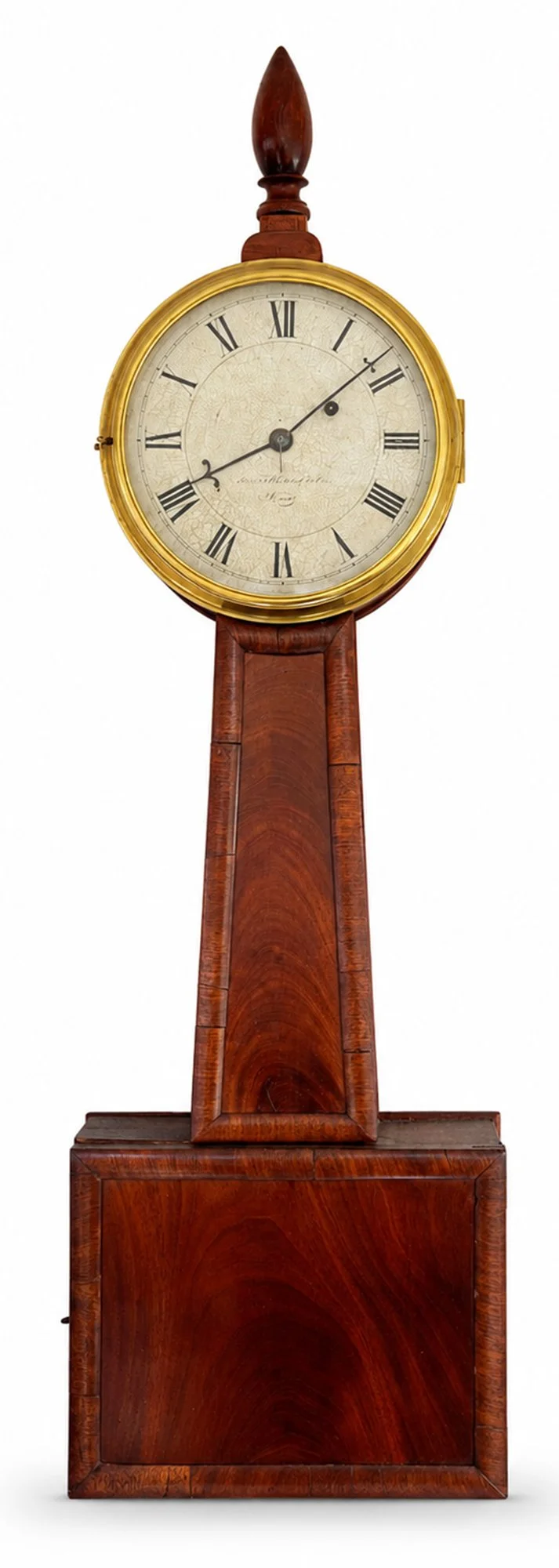
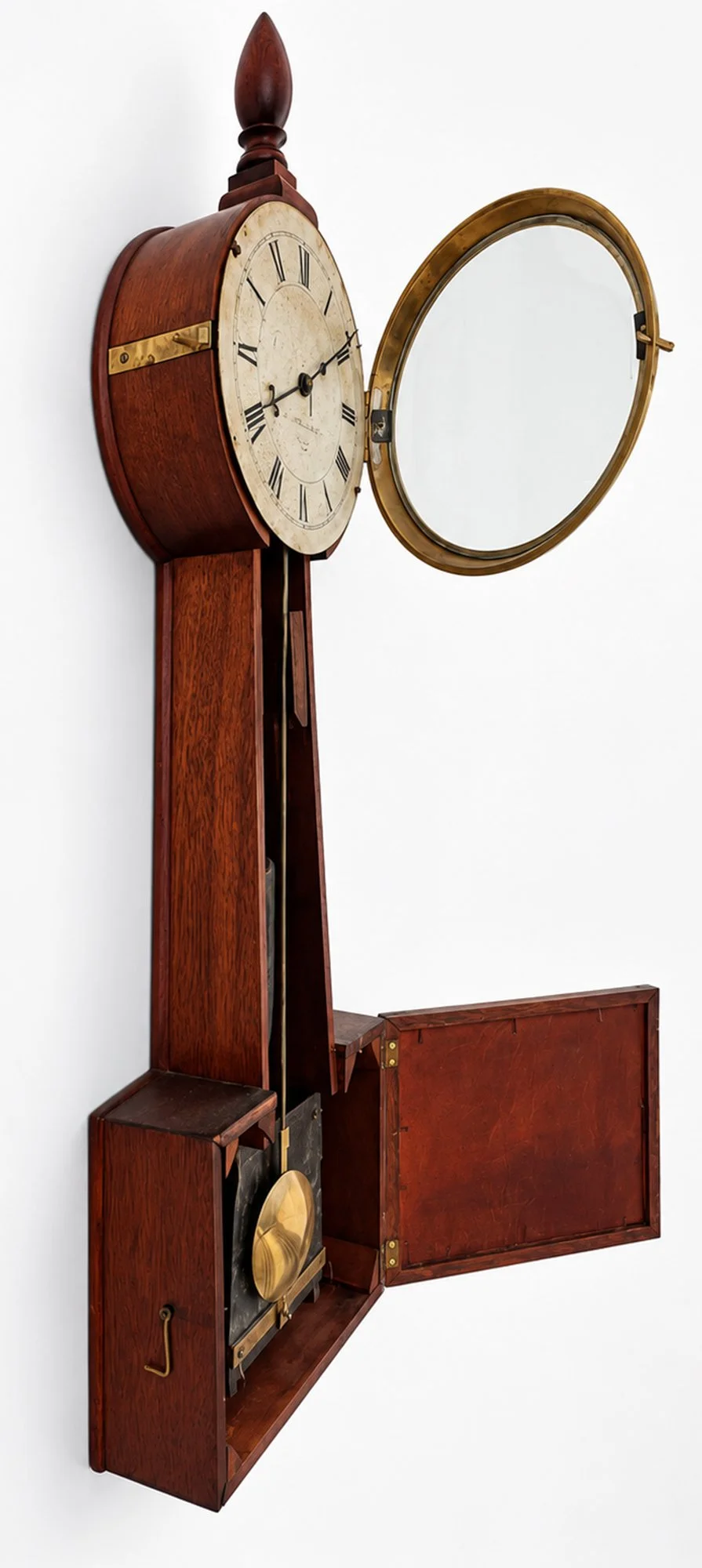
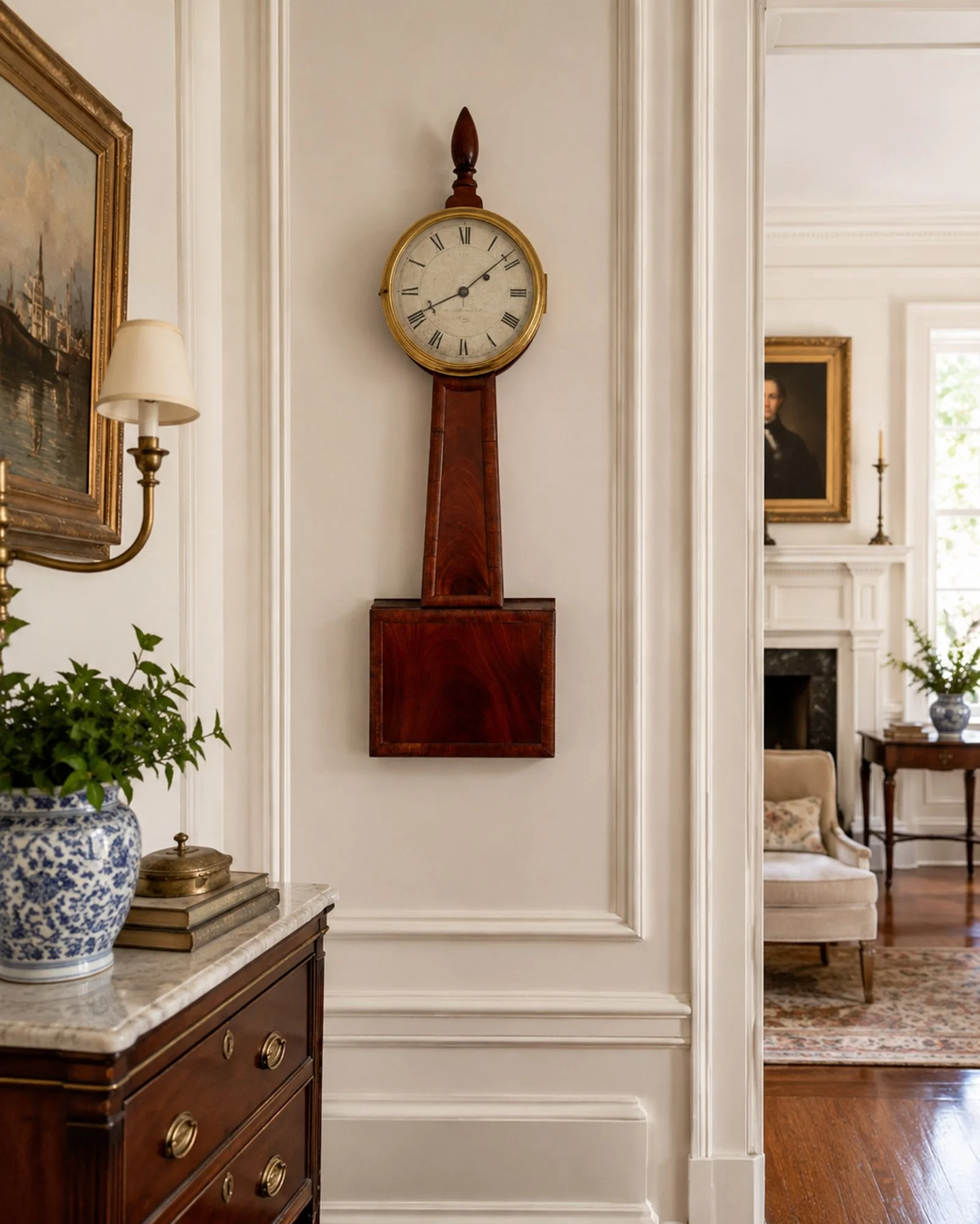
An unusually handsome Federal-period Massachusetts patent timepiece by Simon Willard & Son, retaining a signed painted iron dial, weight-driven brass movement, and a refined mahogany case with figured wood panels to the throat and lower box.
The clock belongs to the celebrated family of American wall timepieces commonly known today as banjo clocks, a form perfected by Simon Willard and patented in 1802. By the 1820s, Willard was working in partnership with his son, and clocks signed Simon Willard & Son represent an important later phase of production from the Willard shop.
Case
The 34-inch case is constructed in richly figured mahogany and presents an especially elegant interpretation of the patent timepiece form. A circular head containing the dial and movement is surmounted by a turned flame- or acorn-form finial. Below, the narrow tapering throat is centered by a figured mahogany panel within a molded frame, leading to the rectangular lower box, likewise fitted with a broad figured mahogany panel.
The use of figured mahogany panels rather than reverse-painted glass gives the clock a restrained, architectural character and places emphasis on the quality of the timber and cabinet construction.
The surface retains an appealing warm color and natural age, with scattered minor wear and shrinkage consistent with an early nineteenth-century object.
Dial
The painted iron dial measures approximately 7⅞ inches in diameter and is laid out with black Roman chapters and a fine outer minute track.
The center is signed in script:
Simon Willard & Son
with a second, now faint inscription below, likely including a production or serial number.
The dial retains extensive fine craquelure, scattered discoloration, and age-related wear, all of which contribute to its historic character. The signature appears visually integrated within the aged painted surface.
A single winding aperture is positioned in the upper-right quadrant, and the clock retains finely worked steel hands appropriate to the period.
Movement
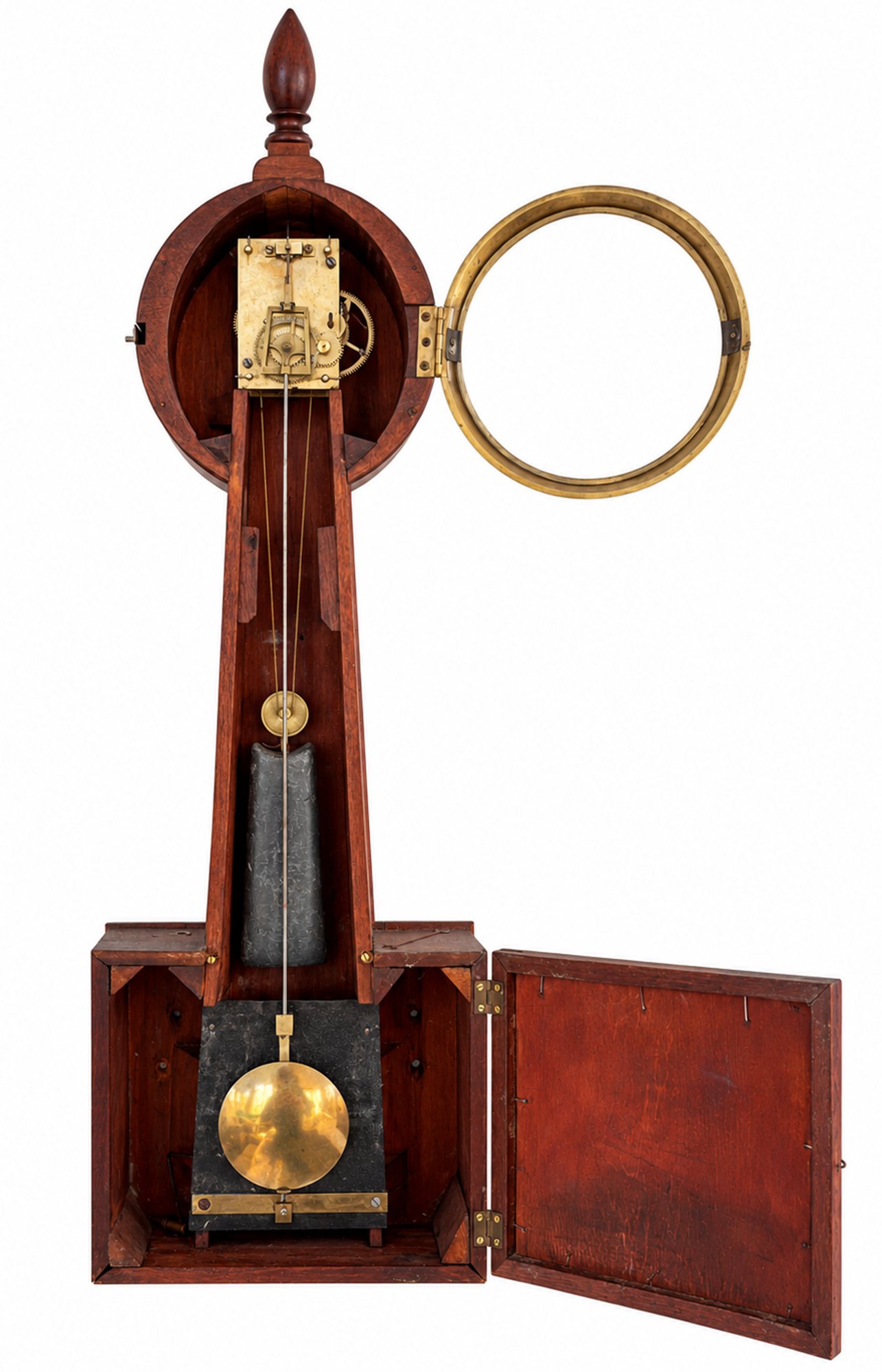
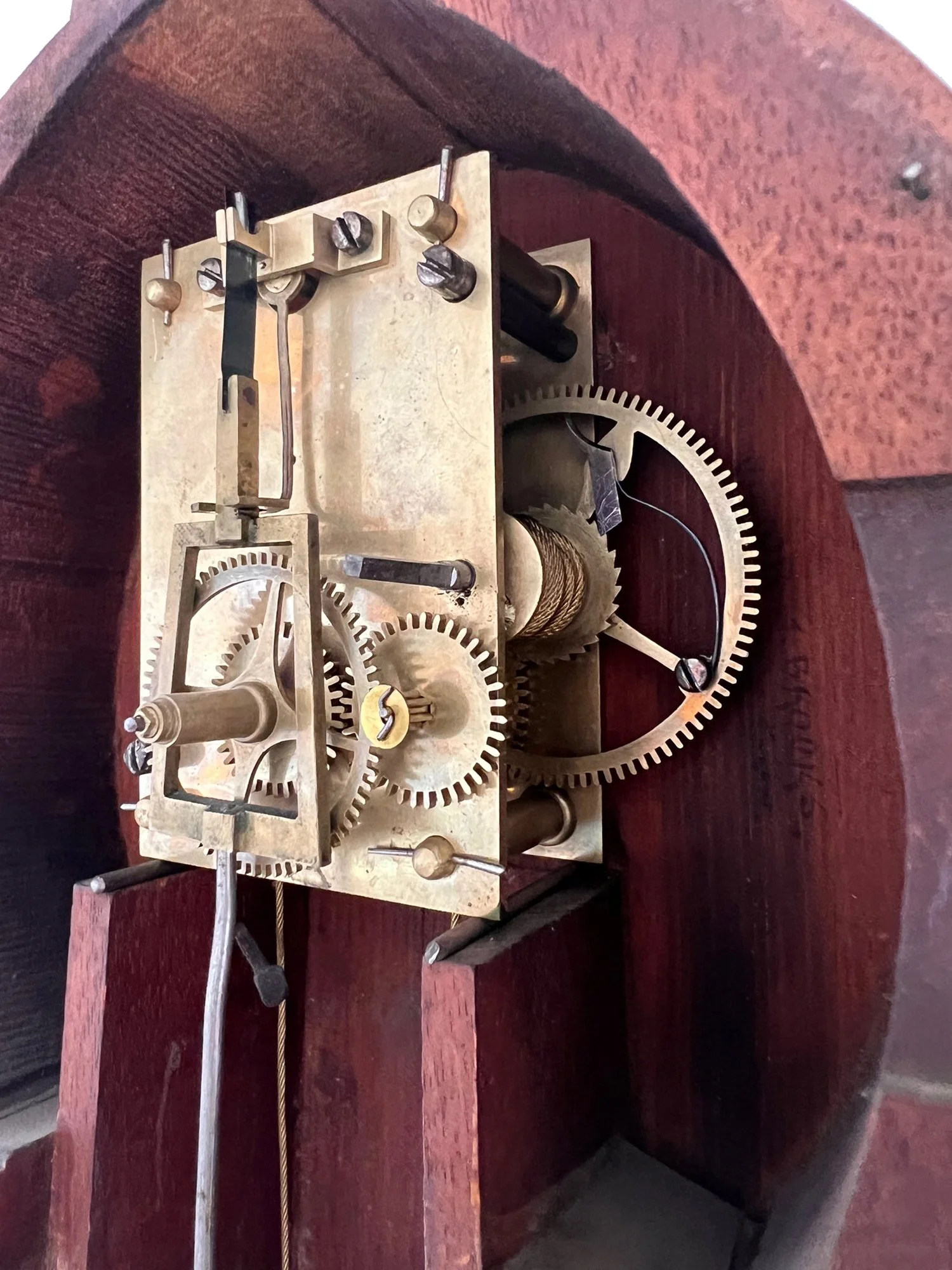
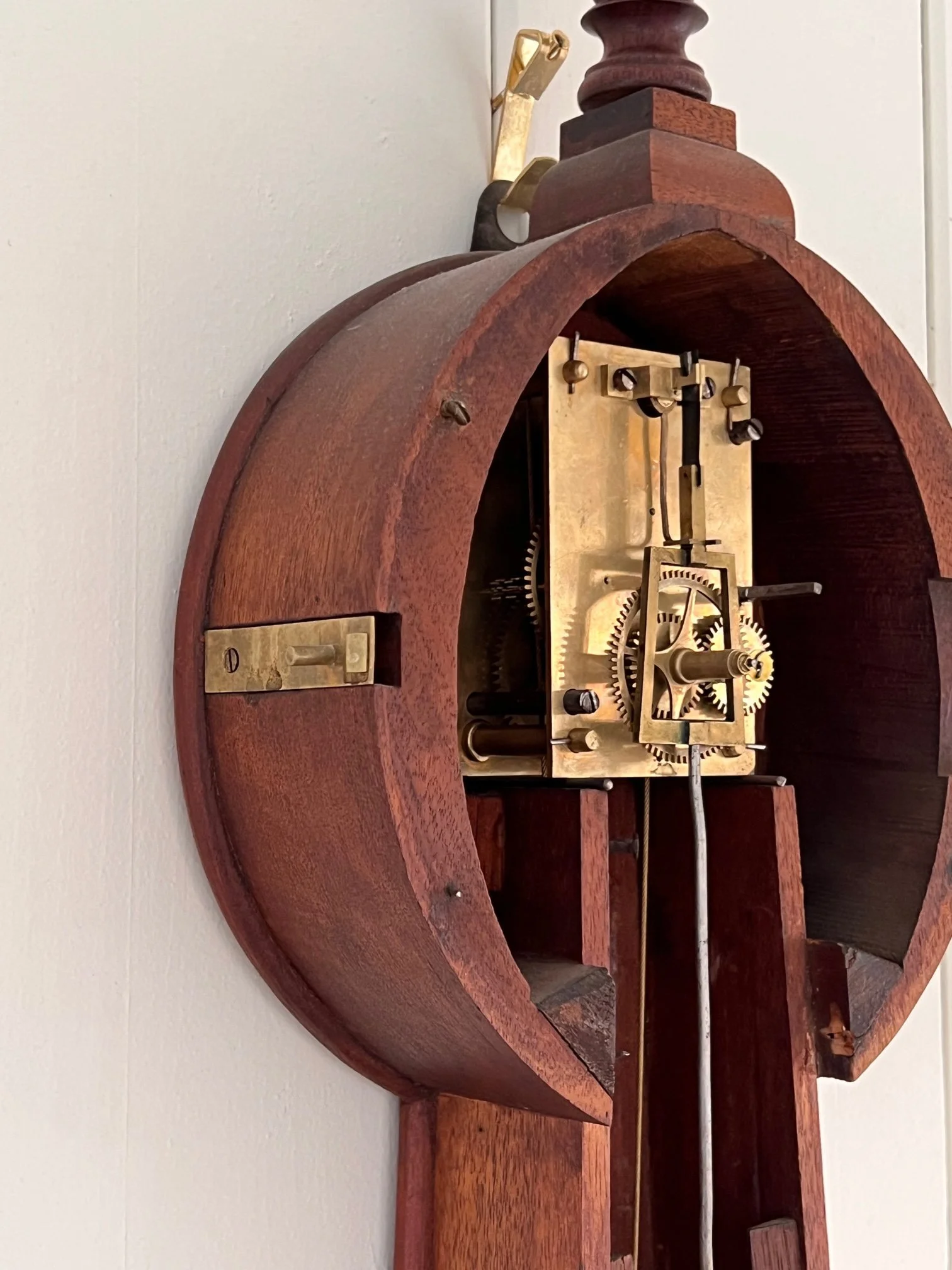
The clock is fitted with an eight-day, time-only, weight-driven brass movement of the type associated with Willard patent timepieces.
The rectangular brass plates, hand-finished gearing, long pendulum rod, brass pendulum bob, and substantial Duck Bill lead weight are all housed within the shallow wall case, demonstrating the compact mechanical ingenuity that made Willard's patent timepiece so successful.
Simon Willard & Son
Simon Willard was among the most important American clockmakers of the Federal period. His 1802 patent for the compact wall timepiece established one of the most recognizable forms in American horology.
By the 1820s, Willard was working with his son, and clocks signed Simon Willard & Son are associated with the firm's later Federal-period production. Surviving examples from this partnership are particularly sought after when they retain signed dials, original movements, and well-preserved mahogany cases.
The present clock's 34-inch scale, signed dial, figured mahogany panels, and largely intact mechanical system make it an especially appealing example.
Details
Simon Willard & Son
Boston / Roxbury, Massachusetts
Circa 1825
Federal period
Mahogany case
Figured mahogany throat panel
Figured mahogany lower panel
Turned wood finial
Painted iron dial
Roman numerals
Signed “Simon Willard & Son No. 4606”
Single winding aperture
Steel hands
Eight-day time-only movement
Weight driven
Brass movement plates and gearing
Long pendulum
Brass pendulum bob
Lead weight
Height: 34 inches
Dial diameter: 7⅞ inches
The visual restraint of the figured mahogany panels distinguishes this clock from the more familiar reverse-painted-glass examples. Combined with its signed dial and compact eight-day movement, the case gives the clock a particularly architectural Federal character.
A fine and highly decorative example of early American clockmaking from one of the most important names in the history of American horology.
Inquire about this Clock